
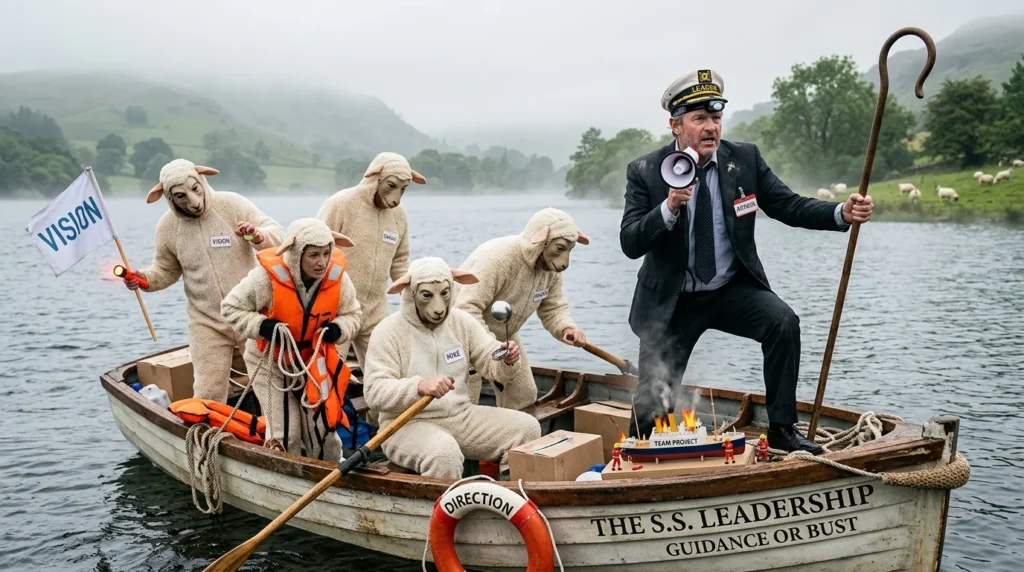
When you’re writing an essay, speech, or story, sometimes the word leader feels too plain. You want something stronger. Something that shows what kind of leader you mean.
That’s where metaphors for a leader become powerful.
Maybe you’re describing a class monitor, a captain, a CEO, or even a character in a story. You feel the leader is strong, guiding, protecting, or inspiring—but plain words don’t fully capture it.
So writers turn to imagery.
A leader becomes something bigger than a job title. A leader becomes a light in darkness, a compass in fog, or a captain in a storm.
In this guide, you’ll learn how to understand and use leadership metaphors in a way that feels natural, emotional, and easy—even if you’re just starting with creative writing.
Let’s make leadership feel alive on the page.
What Is a Metaphor for a Leader?
A metaphor for a leader is a figurative way of describing a leader as something else to show their qualities—without using “like” or “as.”
Simple definition (featured snippet style):
A metaphor for a leader is a comparison that describes a leader as something powerful, guiding, or protective to show their qualities in a creative way.
Instead of saying:
- “He is a good leader.”
You say:
- “He is a lighthouse guiding ships through the dark.”
This instantly creates emotion and meaning.
Why writers use it:
- To show personality, not just job role
- To create emotional impact
- To make writing more vivid and memorable
- To help readers feel leadership
In creative writing, metaphors turn leaders into symbols of strength, direction, and trust.
Quick List of Metaphors for a Leader (Copy-Paste Ideas)
Here are simple, powerful metaphors you can use in writing:
- A lighthouse in the storm — guides others safely
- A compass — shows direction when people are lost
- A captain of a ship — leads through challenges
- A guiding star — gives hope and direction
- A bridge — connects people and ideas
- A torch in the dark — brings clarity and vision
- A shepherd — protects and guides the group
- A mountain peak — stands strong and visible
- A heartbeat — keeps the team alive and moving
- A gardener — helps others grow
- A lighthouse keeper — ensures safety in chaos
- A map — shows the path forward
- A flame — spreads energy and motivation
- A shield — protects the weak
- A river current — moves everyone forward
- A conductor of an orchestra — brings harmony
- A pilot — steers through turbulence
- A sun — gives warmth and energy to others
- A tree with deep roots — stable and grounding
- A beacon — signals hope in darkness
- A coach — builds strength in others
- A lighthouse of wisdom — steady and guiding
- A drumbeat — sets the rhythm for others
- A flame of courage — inspires action
- A bridge-builder — unites divided groups
Each metaphor highlights a different leadership quality—strength, guidance, protection, or inspiration.
Beautiful Metaphors for a Leader
Some metaphors feel especially powerful because they carry emotion and imagery.
🌟 Leader as a Lighthouse
A leader is a lighthouse standing tall in a stormy sea, guiding lost ships home.
🧭 Leader as a Compass
A leader becomes a compass when people feel directionless, always pointing toward purpose.
🚢 Leader as a Ship Captain
A leader is the captain who doesn’t abandon the ship when the waves rise.
🔥 Leader as a Flame
A leader is a flame that lights other candles without losing brightness.
These images work because they connect leadership with safety, guidance, and courage.
Poetic and Deep Metaphors for a Leader
Now let’s go deeper—these are more artistic and symbolic.
- A leader is the sky that holds all storms but never breaks
- A leader is the quiet river carving paths through stone
- A leader is the unseen wind pushing sails forward
- A leader is the root system holding an entire forest together
- A leader is a constellation connecting scattered stars into meaning
- A leader is dawn breaking after a long night
These metaphors feel emotional because they connect leadership to nature, time, and strength beyond words.
Metaphors for a Leader in Creative Writing
Writers use leadership metaphors in many ways:
Storytelling
“The village saw her as a lighthouse, always steady even when fear spread like fog.”
Poetry
“He was the compass no one saw, but everyone followed.”
School essays
“A good leader is like a bridge that connects people and ideas.”
Speech writing
“A leader is not a boss, but a guide who walks with the team.”
Social media captions
- “Be the lighthouse, not the storm.”
- “Lead like a flame—bright but never burning others.”
Metaphors make leadership feel human and relatable, not formal or distant.
Metaphor vs Simile (Simple Comparison)
| Feature | Metaphor | Simile |
|---|---|---|
| Meaning | Direct comparison | Comparison using “like” or “as” |
| Example | He is a lighthouse | He is like a lighthouse |
| Impact | Stronger, more emotional | Softer, more descriptive |
| Use | Poetry, speeches, stories | Beginner writing, explanations |
| Style | Bold and symbolic | Clear and simple |
A metaphor feels more powerful because it becomes the image.
Why People Confuse Metaphors and Similes
This is very common for beginners.
Here’s why:
- Both compare ideas
- Both use imagery
- School lessons often mix them
- Sentence structure looks similar
Simple trick to remember:
- If it says “is” → metaphor
- If it says “like/as” → simile
That tiny rule clears most confusion instantly.
Real-Life Conversation Examples
🏫 Classroom discussion
Student: “What is a leader in poetry?”
Teacher: “A leader can be a lighthouse guiding others through storms.”
🎯 Lesson: Metaphors make meaning visual.
✍️ Writing practice
Student: “I wrote: My captain is like a lighthouse.”
Teacher: “Try: My captain is a lighthouse.”
🎯 Lesson: Metaphors are stronger without ‘like’.
📱 Social media caption
“Good leaders are bridges, not walls.”
🎯 Lesson: Short metaphors work well online.
📖 Storytelling
“He wasn’t just a teacher. He was the compass of our lost classroom.”
🎯 Lesson: Metaphors build emotional depth.
How to Create Your Own Metaphors for a Leader
Here’s a simple method anyone can use:
Step 1: Think of leadership qualities
- Guidance
- Strength
- Protection
- Vision
Step 2: Match with real-world objects
- Lighthouse → guidance
- Shield → protection
- Sun → inspiration
- Mountain → strength
Step 3: Build the sentence
“A leader is a ______ because ______.”
Example:
“A leader is a lighthouse because they guide others through confusion.”
That’s it. Simple and powerful.
Common Mistakes Beginners Make
- ❌ Using too many metaphors in one sentence
✔ Keep it simple: one strong image is enough - ❌ Mixing simile and metaphor
✔ Choose one style and stay consistent - ❌ Using vague comparisons
✔ Avoid: “leader is like something nice”
✔ Use clear images: “leader is a compass” - ❌ Overcomplicating language
✔ Simple words create stronger emotional impact
Related Figurative Language Terms
- Simile → compares using like/as
- Imagery → language that creates pictures in the mind
- Personification → giving human traits to objects
- Symbolism → using objects to represent ideas
- Hyperbole → exaggerated expression for effect
These tools often work together in creative writing.
Frequently Asked Questions
What is a simple metaphor for a leader?
A leader is a lighthouse guiding people through darkness.
Why are metaphors used for leaders?
They help show leadership qualities in a visual and emotional way.
What is the best metaphor for a strong leader?
A mountain or shield—symbols of strength and stability.
Can I use metaphors in essays?
Yes, especially in creative or descriptive writing essays.
What is a poetic metaphor for leadership?
A leader is a compass of hope in uncertain times.
Are metaphors better than similes?
Metaphors are usually stronger and more emotional.
Conclusion
A metaphor for a leader is more than a writing trick—it’s a way of seeing leadership as something alive, emotional, and meaningful. Instead of just describing someone’s role, you turn them into a symbol: a lighthouse, a compass, a flame, or a bridge.
Once you start thinking in images, your writing becomes more powerful and memorable. Even simple sentences begin to carry emotion.
You don’t need complicated vocabulary—just clear imagination and honest observation. That’s where the best metaphors come from.