
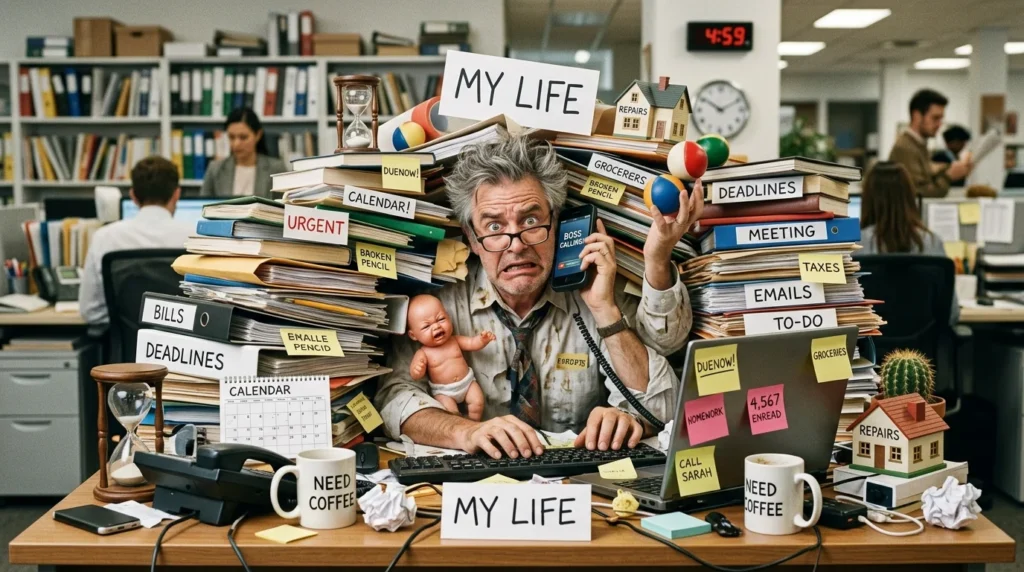
You know that feeling when your thoughts will not slow down?
Maybe your chest feels tight before a test. Maybe work piles up so high it feels impossible to breathe. Or maybe you sit quietly while your mind races like a storm nobody else can see.
That is exactly why people search for a metaphor for stress.
Sometimes normal words are too small for heavy emotions. A good metaphor turns invisible feelings into something you can actually picture. It gives stress a shape, a sound, or even a color. That tiny shift helps writers explain emotions more clearly and helps readers feel understood.
Students use stress metaphors in essays. Poets use them to create emotional imagery. Storytellers use them to build tension. Even social media captions often rely on figurative language to express overwhelm in a creative way.
Here’s the interesting part: the best metaphors are usually simple.
A crowded mind can become “a buzzing hive.” Anxiety can become “a knot pulled tighter every hour.” Suddenly, the emotion feels real and visual.
Let’s explore the most beautiful, poetic, and beginner-friendly stress metaphors you can use in writing today.
What Is a Metaphor for Stress?
A metaphor for stress compares stress to something else without using “like” or “as.”
Think about it this way:
Instead of saying:
“I feel stressed.”
You might say:
“My mind is a pressure cooker.”
That creates stronger imagery and emotional impact.
Writers use metaphors because they help readers feel emotions instead of simply reading about them. Metaphorical language adds depth, symbolism, and vivid imagination to creative writing.
Simple Real-World Examples
- “Stress is a storm cloud hanging over me.”
- “My thoughts are tangled wires.”
- “Pressure is crushing my shoulders.”
- “Her mind became a crowded highway.”
Each one paints a picture instantly.
That is the power of figurative language.
Quick List of Metaphor for Stress Examples
Here are some easy and creative examples you can copy, study, or use in your own writing.
- Stress is a ticking bomb — pressure building inside
- My brain is a crowded highway — too many thoughts at once
- Stress is quicksand — the harder you fight, the deeper you sink
- Her worries became heavy chains — emotional burden
- My chest is a locked cage — trapped emotions
- Stress is a thunderstorm — loud emotional chaos
- His mind was a buzzing hive — nonstop activity
- Anxiety became a shadow — always following
- Stress is a volcano — emotions ready to explode
- My thoughts are tangled headphones — confusion everywhere
- Pressure is an avalanche — overwhelming problems
- Stress is a backpack full of bricks — emotional exhaustion
- Her mind became a battlefield — inner conflict
- Stress is a burning candle at both ends — exhaustion from overwork
- My heart is a drum beating too fast — panic and tension
- Stress is a prison cell — emotional restriction
- His worries were wolves at the door — fear waiting nearby
- Stress is a cracked mirror — broken focus
- My emotions became ocean waves — impossible to control
- Stress is smoke filling a room — slowly taking over
- Her thoughts were spinning wheels — endless mental loops
- Pressure became an iron hand — crushing emotional weight
- Stress is a dark cloud before rain — emotional heaviness
- My brain is a cluttered attic — mental overload
- Stress is a wildfire — spreading too quickly
- Worry became thorns around my mind — painful thoughts
- Stress is a sinking ship — losing control
- My nerves are stretched rubber bands — close to snapping
- Stress is static noise — constant mental distraction
- My thoughts became a runaway train — impossible to stop
Beautiful Metaphors for Stress
Some metaphors feel more emotional and poetic. These work beautifully in storytelling, journaling, and descriptive writing.
“Stress is rain trapped inside the chest.”
This creates soft but painful emotional imagery. It suggests sadness, heaviness, and emotional pressure waiting to fall.
“My thoughts became birds trapped in a cage.”
This metaphor shows mental restlessness and emotional frustration.
“Stress is a candle melting too fast.”
Writers often use this image to describe burnout and exhaustion.
“Her mind was a stormy ocean.”
The waves symbolize overwhelming thoughts and emotional instability.
“Pressure sat on his shoulders like armor made of stone.”
This creates a visual feeling of emotional weight.
That tiny image makes the sentence feel alive.
Poetic and Deep Metaphor for Stress Ideas
If you want darker, deeper, or more artistic imagery, these examples work especially well in poetry and creative writing.
- Stress is a forest fire eating every quiet thought.
- My anxiety became a room with no windows.
- Pressure is a clock screaming louder every second.
- Stress is black ink spreading through clear water.
- Her thoughts were shattered glass under bare feet.
- Worry became winter that never ended.
- Stress is a serpent tightening around the ribs.
- My mind became a city that never sleeps.
- Pressure is thunder trapped beneath the skin.
- Stress is a silent scream underwater.
Most writers use these because symbolic imagery creates stronger emotional connection.
Readers may not remember plain sentences.
But they remember feelings.
Metaphor for Stress in Creative Writing
Creative writers use metaphors to make emotions visual and memorable.
Without imagery:
“He felt stressed.”
With imagery:
“His thoughts crashed into each other like cars in heavy traffic.”
The second version feels alive.
In Storytelling
Metaphors help readers enter a character’s emotional world.
Example:
“The deadline hung above her head like a falling piano.”
In Poetry
Poets use symbolic language to create mood and emotional rhythm.
Example:
“Stress dripped from the ceiling of my mind all night long.”
In School Assignments
Teachers often encourage figurative language because it improves descriptive writing.
Example:
“Exam pressure wrapped around the classroom like thick fog.”
In Social Media Captions
Metaphors make captions feel relatable and emotional.
Example:
“Running on caffeine and collapsing stars.”
Short. Emotional. Visual.
Metaphor vs Simile
| Feature | Metaphor | Simile |
|---|---|---|
| Meaning | Direct comparison | Comparison using “like” or “as” |
| Grammar | Says something is something else | Says something is like something |
| Emotional Impact | Stronger and deeper | Softer and more obvious |
| Example | “Stress is a storm.” | “Stress feels like a storm.” |
| Common Beginner Mistake | Making it too confusing | Overusing “like” repeatedly |
Simple Trick
If the sentence uses like or as, it is usually a simile.
If it directly compares two things, it is usually a metaphor.
Why People Confuse Metaphors and Similes
This is where many beginners get confused.
Both metaphors and similes compare things.
The difference is small but important.
Simile
“My stress felt like fire.”
Metaphor
“My stress was fire.”
One compares.
The other transforms.
Many students accidentally mix the two because schools often teach them together. The emotional purpose is similar, but the sentence structure changes.
Here’s the simple trick:
- Simile = softer comparison
- Metaphor = stronger identity
Real-Life Conversation Examples
1. Classroom Stress
Student: “I have three exams tomorrow.”
Friend: “Sounds like your brain is a pressure cooker right now.”
🎯 Lesson: Stress metaphors make emotions easier to picture.
2. Poetry Writing
Writer: “I cannot explain this feeling.”
Teacher: “Try turning stress into an image instead.”
🎯 Lesson: Imagery creates emotional depth.
3. Social Media Caption
Caption: “My thoughts are running marathons at 2 a.m.”
🎯 Lesson: Short metaphors feel relatable and memorable.
4. Storytelling Scene
Character: “The office lights felt like interrogation lamps.”
🎯 Lesson: Metaphors can build tension and mood instantly.
5. School Essay
Student: “Stress is a backpack full of stones.”
🎯 Lesson: Simple metaphors often work best.
How to Create Your Own Metaphor for Stress
You do not need to be a poet to write strong metaphors.
Here’s an easy method.
1. Think About the Feeling
Ask yourself:
- Does stress feel heavy?
- Fast?
- Loud?
- Trapped?
- Sharp?
That emotion becomes your clue.
2. Find a Physical Image
Connect the feeling to something visual.
Examples:
- Heavy → bricks
- Fast → racing train
- Trapped → cage
- Loud → thunderstorm
3. Keep It Simple
Many beginners try to sound too fancy.
Simple images often feel more powerful.
Instead of:
“Stress is a multidimensional psychological labyrinth.”
Try:
“Stress is a maze with no exit.”
Cleaner. Stronger. More human.
4. Use Nature Symbolism
Nature creates beautiful poetic language.
Examples:
- storms
- oceans
- fire
- winter
- waves
- shadows
Writers love nature imagery because emotions already feel connected to it.
Common Mistakes Beginners Make
Using Mixed Metaphors
❌ “Stress is a storm that barks loudly.”
Why it fails:
Storms do not bark.
✅ “Stress is a storm shaking the windows.”
Making Metaphors Too Complicated
❌ “Stress is an interdimensional emotional vortex.”
Why it fails:
Readers get distracted.
✅ “Stress is quicksand pulling me down.”
Repeating the Same Imagery
❌ Using “storm” five times in one paragraph
Why it fails:
The writing feels repetitive.
✅ Mix imagery:
fire, chains, waves, fog, shadows
Explaining the Metaphor Too Much
❌ “Stress is a volcano because volcanoes explode and stress also explodes emotionally.”
✅ “Stress is a volcano waiting to erupt.”
Shorter creates stronger impact.
Related Figurative Language Terms
Simile
A comparison using “like” or “as.”
Example:
“Stress spread like wildfire.”
Imagery
Descriptive language that helps readers visualize emotions.
Example:
“Cold sweat slid down his neck.”
Personification
Giving human traits to nonhuman things.
Example:
“Stress knocked on my door all night.”
Symbolism
Using objects or images to represent deeper meaning.
Example:
Winter symbolizes emotional emptiness.
Hyperbole
Extreme exaggeration for emotional effect.
Example:
“I have a million things to do.”
Famous Stress Imagery in Literature
Many famous writers describe emotional pressure through symbolic imagery.
In classic poetry, storms often symbolize inner conflict.
Dark oceans represent emotional uncertainty.
Fire represents panic, anger, or emotional overload.
Even modern novels use metaphors constantly because readers connect more deeply to visual emotions than plain explanations.
That is why figurative language remains one of the strongest writing techniques in literature.
Frequently Asked Questions
What is a good metaphor for stress?
A good metaphor for stress is:
“Stress is a backpack full of bricks.”
It clearly shows emotional weight and exhaustion.
What is a poetic way to describe stress?
You can say:
“Stress is thunder trapped beneath the skin.”
This creates emotional and visual imagery.
What is the difference between stress metaphors and similes?
A metaphor says stress is something.
A simile says stress is like something.
Why do writers use stress metaphors?
Writers use metaphors to create emotional imagery and make feelings easier to visualize.
Can metaphors improve creative writing?
Yes. Metaphors make writing more emotional, descriptive, and memorable.
What are simple metaphors for students?
Easy examples include:
- “Stress is a storm.”
- “My mind is a crowded room.”
- “Pressure is a heavy backpack.”
Are metaphors part of figurative language?
Yes. Metaphors are one of the most common types of figurative languag
Conclusion
Stress can feel invisible until language gives it shape.
That is why metaphors matter so much.
A simple image like “a stormy mind” or “a backpack full of bricks” can explain emotions more deeply than long explanations ever could. Good metaphors help readers see feelings, not just read about them.
The best part is this: you do not need perfect poetry to create meaningful imagery.
You only need honesty, emotion, and a clear picture in your mind.
Start simple. Use real feelings. Trust the images that naturally appear when emotions become hard to explain.
Sometimes the strongest writing begins with one small metaphor that suddenly feels true.