
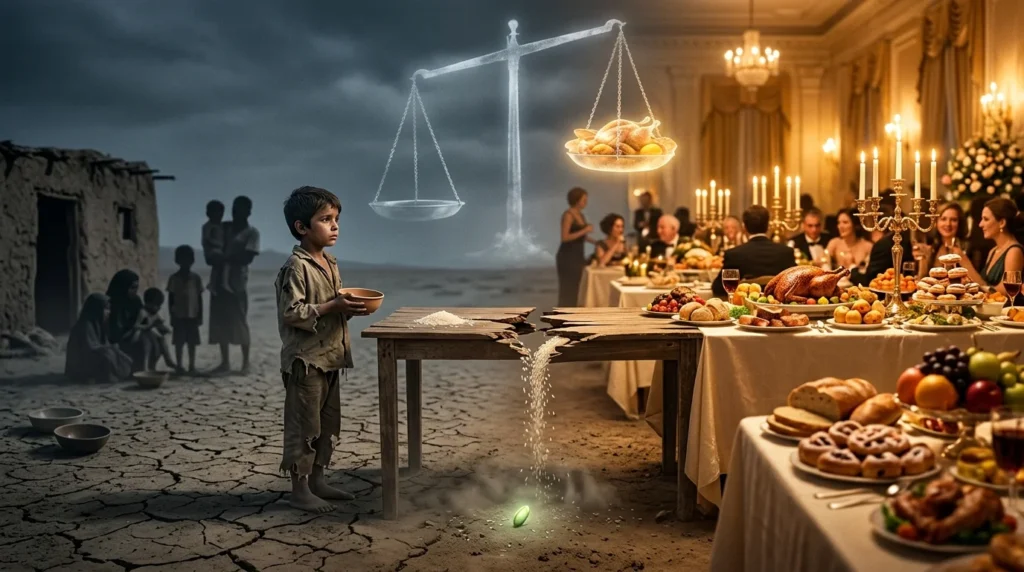
Sometimes a student sits in front of a blank page, trying to describe something as heavy as global hunger. The facts are clear, but the words feel too small. This is where a metaphor for world hunger becomes powerful. It helps writers turn a painful reality into something the reader can feel, not just understand.
People search for this topic because hunger is hard to describe directly. Simple sentences like “many people are hungry” don’t carry enough emotion or imagery. Writers want stronger language for essays, poems, speeches, and social media awareness posts. But beginners often get confused about how to turn a real-world issue into figurative language without sounding exaggerated or unclear.
Think about it this way: metaphors don’t change the truth—they shine a light on it. They help us see hunger as something deeper, like a shadow, a storm, or an empty bowl that never fills. Once you learn how these images work, your writing becomes more emotional, vivid, and memorable.
Let’s explore how these metaphors work and how you can create your own with confidence.
What Is a Metaphor for World Hunger?
A metaphor for world hunger is a figurative expression that describes global hunger by comparing it to something else—without using “like” or “as.”
In simple words: it turns hunger into an image the reader can feel.
Writers use it because hunger is not just a physical issue—it is emotional, social, and deeply human. Metaphors help express that depth.
For example:
- “World hunger is a never-ending empty bowl.”
- “Hunger is a shadow that follows every child at the table.”
These comparisons make the idea stronger, more visual, and more emotional. This is the heart of figurative language, where meaning grows through imagination.
Quick List of Metaphor for World Hunger Examples
Here are simple, copy-paste-friendly examples:
- A never-ending empty bowl — hunger that never feels satisfied
- A silent earthquake — widespread suffering shaking unseen lives
- A broken table with missing plates — lack of food for many people
- A shadow at every dinner table — hunger always present
- A drought inside human bellies — extreme emptiness
- A storm that steals bread — food insecurity taking resources away
- A burning emptiness in the stomach — constant hunger pain
- A locked door to the kitchen of life — no access to food
- A heavy silence in empty homes — absence of meals and comfort
- A fading light in children’s eyes — loss caused by malnutrition
- An endless waiting line for food — ongoing global struggle
- A cracked plate of humanity — broken food systems
- A ticking clock of starvation — urgency of hunger crisis
- A cold wind blowing through kitchens — emptiness and loss
- A sinking ship of survival — communities struggling to stay alive
- A drained river of nourishment — food supply running out
- A torn blanket over the world — lack of protection from hunger
- A forgotten promise at the dinner table — unmet needs
- A burning question with no answer — unresolved global issue
- A mirror reflecting empty plates — reality of inequality
Beautiful Metaphors for World Hunger
Here are more emotionally rich and poetic versions:
- “World hunger is a mother’s silent tears over an empty pot.”
- “It is a sky that rains hope but never food.”
- “Hunger is a language spoken by empty stomachs everywhere.”
- “It is a map of broken meals spread across the world.”
- “World hunger is a story written in missing dinners.”
Each metaphor adds emotion, not just information. That’s what makes writing powerful.
Poetic and Deep World Hunger Ideas
Writers often use symbolism to go deeper:
- Hunger as “a cracked mirror of society” → reflects inequality
- Hunger as “a fading heartbeat of humanity” → emotional urgency
- Hunger as “a locked garden of food” → access denied
- Hunger as “a long night without breakfast” → ongoing suffering
Think about it this way: poetry doesn’t just describe—it feels.
Metaphor for World Hunger in Creative Writing
In creative writing, metaphors help build emotional scenes.
Example in a story:
The village sat under a tired sky. Hunger was a shadow that never left their doorsteps.
Example in a poem:
Hunger walks barefoot across nations,
leaving silence where meals should be.
Writers use these images in:
- Essays about poverty
- Speeches on global issues
- Poems about humanity
- Social media awareness posts
That tiny change turns plain writing into emotional storytelling.
Metaphor vs Simile
| Feature | Metaphor | Simile |
|---|---|---|
| Meaning | Direct comparison | Comparison using “like/as” |
| Example | Hunger is a shadow | Hunger is like a shadow |
| Emotion | Stronger, deeper | Softer, clearer |
| Style | Poetic | Simple |
| Common mistake | Overloading images | Overusing “like” |
Why People Confuse Metaphors and Similes
This is where many beginners get confused.
- Both compare ideas
- School lessons mix them together
- Sentence patterns look similar
- Students forget the “like/as” rule
Simple trick:
If you see “like” or “as,” it is a simile. If not, it is a metaphor.
Real-Life Conversation Examples
1. Classroom discussion
Teacher: “Can you describe world hunger in a metaphor?”
Student: “It is a shadow that never leaves the table.”
🎯 Lesson: Metaphors make ideas visual.
2. Poetry writing session
Friend: “My line feels weak.”
Writers: “Try turning hunger into an image.”
🎯 Lesson: Images create emotion.
3. Social media caption
User: “World hunger is a broken plate of humanity.”
Friend: “That’s powerful.”
🎯 Lesson: Short metaphors can be impactful.
4. Storytelling moment
Writer: “I want readers to feel it.”
Editor: “Use hunger as a storm.”
🎯 Lesson: Metaphors build atmosphere.
How to Create Your Own Metaphor for World Hunger
Here’s a simple trick:
- Think of hunger as a feeling (empty, painful, endless)
- Match it with a strong image (storm, shadow, fire)
- Connect emotion + image
Example:
- Feeling: emptiness
- Image: desert
- Metaphor: “World hunger is a desert inside human stomachs.”
That tiny change creates a stronger image.
Common Mistakes Beginners Make
- Using too many metaphors in one sentence
- Making comparisons too confusing
- Choosing weak images like “hunger is bad”
- Forgetting emotional depth
- Over-explaining instead of showing
Correct version is always simple and visual.
Related Figurative Language Terms
- Simile — compares using like/as
- Imagery — language that creates pictures in the mind
- Personification — giving human traits to ideas
- Symbolism — using objects to represent deeper meaning
- Hyperbole — exaggeration for effect
These tools work together in creative writing.
Frequently Asked Questions
1. What is a simple metaphor for world hunger?
World hunger is a never-ending empty bowl.
2. Why are metaphors used for hunger?
They create emotional and visual understanding.
3. Can students use these in essays?
Yes, they are great for creative and descriptive writing.
4. What is the difference between metaphor and simile?
Metaphors say “is,” similes use “like” or “as.”
5. Are metaphors formal or informal?
They can be used in both academic and creative writing.
6. What makes a good hunger metaphor?
Strong emotional image + simple clear meaning.
7. Can metaphors be used in speeches?
Yes, they make speeches more powerful and memorable.
Conclusion
Metaphors help us say what plain words cannot. A metaphor for world hunger turns a global issue into something we can visualize, feel, and remember. It transforms statistics into stories and facts into emotions.
When you use imagery like empty bowls, shadows, storms, or deserts, you are not just writing—you are helping others see reality more clearly. That is the real strength of figurative language. Keep practicing, and your writing will naturally become more vivid and expressive.