
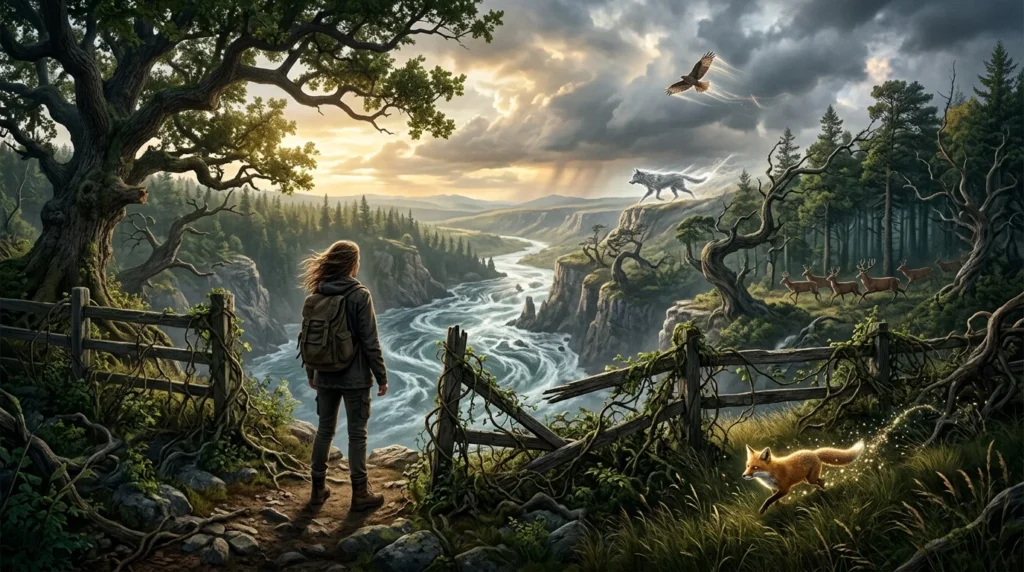
When you’re trying to describe something untamed, free, or hard to control, the phrase metaphor for wild often shows up in creative writing searches. Maybe you’re writing a poem about a stormy heart. Or maybe your teacher asked you to describe nature in a more expressive way. And suddenly, the word wild feels too small.
This is where metaphors come in.
Writers don’t just say something is wild. They compare it to powerful images—like fire, storms, oceans, or animals running free. That’s what makes language come alive. It’s not just description anymore. It becomes emotion you can see.
Let’s explore how “wild” turns into something beautiful, symbolic, and unforgettable in writing.
What Is a Metaphor for Wild?
A metaphor for wild is a direct comparison that describes something untamed, free, chaotic, or natural using symbolic imagery instead of literal meaning.
In simple terms:
A metaphor for wild is when you say something is wild by comparing it to something powerful in nature or emotion.
Writers use it to show:
- lack of control
- strong emotion
- natural freedom
- chaos or intensity
For example:
- Her anger was a storm breaking through glass.
- His spirit was a wolf running through endless forests.
That tiny change creates a stronger image.
Most writers use this because “wild” alone feels flat. But “wild like a storm” or “wild like fire” feels alive.
Quick List of Metaphor for Wild Examples
Here are easy, copy-paste friendly examples you can use in school, poetry, or storytelling:
- Her thoughts were a thunderstorm — loud and uncontrollable
- His heart was a wild horse running free
- The forest was a breathing monster of green silence
- Her laughter was fire escaping a broken cage
- The ocean was a restless giant turning in its sleep
- His anger was lava spilling from a cracked mountain
- The crowd was a stampede of chaos
- Her spirit was a wolf howling at the moon
- The wind was a furious child shaking the trees
- His mind was a jungle with no paths
- The city at night was a wild beast glowing with eyes
- Her dreams were untamed rivers breaking their banks
- His energy was lightning trapped in human skin
- The storm was a painter gone mad with color
- Her emotions were a wildfire eating everything in sight
- The desert was a silent lion waiting to roar
- His freedom was a bird breaking every invisible chain
- The sea was a wild drum beating against the shore
- Her fear was a pack of wolves closing in
- His joy was fireworks exploding without rules
Each one turns “wild” into something you can see and feel.
Beautiful Metaphors for Wild
Some metaphors feel more emotional and artistic. These are often used in poetry:
- Wild is a heart beating without a cage
- Wild is the wind that refuses to learn silence
- Wild is a soul painted outside the lines
- Wild is fire that remembers no master
- Wild is the ocean forgetting where it ends
Think about it this way:
Wild doesn’t always mean chaos. Sometimes it means freedom without permission.
That’s why poets love it.
Poetic and Deep Wild Ideas
Here’s where language becomes more symbolic and emotional:
- Wild as inner rebellion
- Wild as emotional truth
- Wild as nature refusing control
- Wild as childhood innocence before rules
- Wild as love that cannot be contained
Examples:
- She was wild not because she was loud, but because she could not be tamed by silence.
- His soul carried wild places no map could reach.
- Love, in its wild form, does not ask for permission.
This is where many beginners get confused—wild is not just “crazy.” It can also mean deeply alive.
Metaphor for Wild in Creative Writing
Writers use metaphors for wild in:
- Poetry
- Storytelling
- Descriptive essays
- Character development
- Song lyrics
Mini writing examples:
Story example:
The boy walked into the forest like a wild question no one could answer.
Poetry example:
She was wild,
not like noise,
but like stars refusing to be counted.
School essay example:
The storm was a wild dancer moving across the sky.
These help your writing feel more expressive and less ordinary.
Metaphor vs Simile
| Feature | Metaphor | Simile |
|---|---|---|
| Meaning | Direct comparison | Comparison using “like” or “as” |
| Example | Her mind was a storm | Her mind was like a storm |
| Emotional impact | Stronger, deeper | Softer, clearer |
| Structure | “A is B” | “A is like B” |
| Beginner mistake | Too abstract | Overusing “like/as” |
Why People Confuse Metaphors and Similes
This is very common.
Here’s why:
- School teaches both together
- Both compare things
- Sentence patterns look similar
- Beginners rely on “like” too much
Example confusion:
- Wrong metaphor: She was like a wild storm (this is a simile)
- Correct metaphor: She was a wild storm
That tiny change creates a stronger image.
Real-Life Conversation Examples
Classroom:
Teacher: “Describe anger using a metaphor.”
Student: “Anger is a wildfire in the chest.”
🎯 Lesson: Emotion becomes visual.
Friend chat:
A: “Why are you so energetic today?”
B: “I’m a wild spark that didn’t sleep.”
🎯 Lesson: Everyday speech can be poetic.
Poetry group:
Writer: “I want to show freedom.”
Other: “Try: freedom is a wild bird breaking glass skies.”
🎯 Lesson: Wild works well in symbolism.
Social media caption:
“Feeling like wild weather today.”
🎯 Lesson: Short metaphors create strong mood.
How to Create Your Own Metaphor for Wild
Here’s the simple trick:
- Think of what “wild” feels like
(free, loud, emotional, natural) - Pick a strong image
- fire
- storm
- animal
- ocean
- Combine feeling + image
Examples:
- Wild + fire → Her anger was wildfire
- Wild + ocean → His mind was a storming sea
- Wild + animal → She was a wolf running free
This is where creativity starts to feel natural.
Common Mistakes Beginners Make
- Using “wild” too literally → He is wild (too plain)
- Overusing “like” → turns metaphor into simile
- Mixing too many images → confusing meaning
- Choosing weak comparisons → wild is a chair (no emotion)
- Forgetting emotion → metaphors need feeling
Fix: always ask, “What does wild look like in my mind?”
Related Figurative Language Terms
- Simile: comparison using like/as
- Imagery: language that creates pictures in the mind
- Personification: giving human traits to things
- Symbolism: using objects to represent ideas
- Hyperbole: extreme exaggeration for effect
Frequently Asked Questions
What is a simple metaphor for wild?
Wild is a storm, fire, or untamed animal in figurative language.
How do you write a metaphor for wild?
Compare wildness to nature like storms, oceans, or animals.
What does wild mean in poetry?
It represents freedom, emotion, chaos, or untamed energy.
Is “wild like fire” a metaphor?
No, it is a simile because it uses “like.”
What is a strong metaphor for wild emotions?
“My emotions were a wildfire breaking through silence.”
Why do writers use wild metaphors?
To show intensity, freedom, and emotional depth.
Conclusion
A metaphor for wild is more than a writing trick. It’s a way to turn simple ideas into living images. Instead of saying something is chaotic or free, you paint it with storms, fire, oceans, and animals that move beyond control.
The best part is this: you don’t need advanced vocabulary. You just need imagination. Once you start seeing “wild” in pictures instead of words, your writing becomes more powerful, emotional, and memorable.
So next time you write, don’t just say wild—show it roaring, burning, and running free.