
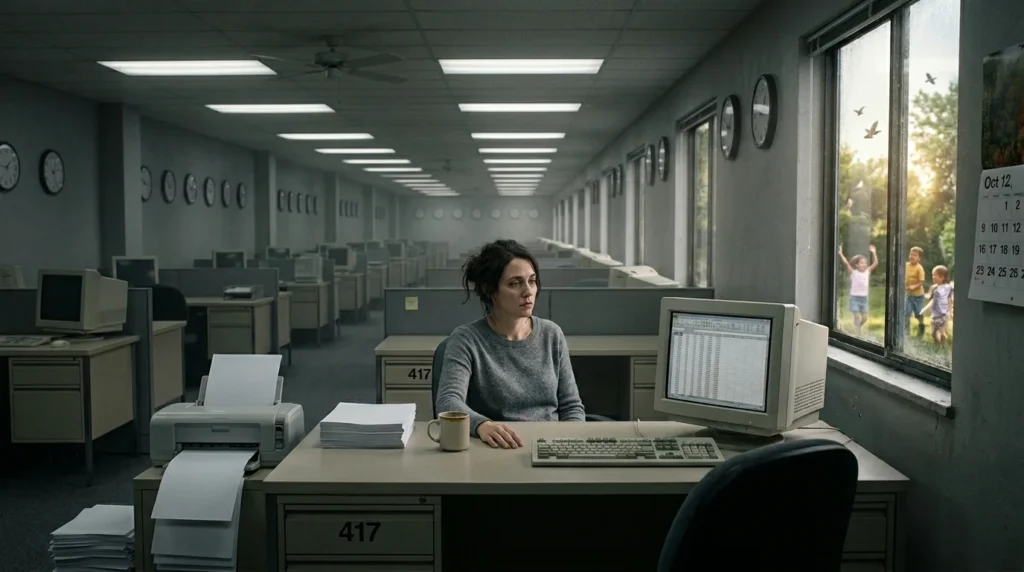
Have you ever tried to describe a class, meeting, book, or conversation that felt painfully dull? Most people reach for simple words like “boring” or “uninteresting,” but those words rarely create a strong image.
That’s why many writers search for a metaphor for something boring. A good metaphor turns a plain description into something memorable. Instead of saying a lecture was boring, you might call it “a desert without an oasis” or “a clock trapped in slow motion.”
These comparisons help readers feel the experience rather than simply understand it. Whether you’re writing a school essay, crafting poetry, posting on social media, or working on a story, metaphors can add color, emotion, and vivid imagery.
The challenge is knowing which metaphor fits your situation. Some create humor, while others add poetic depth or emotional weight.
Let’s explore some of the most creative and effective metaphors for something boring and learn how to use them naturally in your writing.
What Is a Metaphor for Something Boring?
A metaphor for something boring is a figurative comparison that describes dullness, monotony, or lack of excitement by comparing it to something else.
In figurative language, a metaphor says one thing is another thing to create a stronger image.
For example:
- “The meeting was a sleeping turtle.”
- “The lecture was a dry desert.”
- “The conversation was cold oatmeal.”
Writers use metaphors because they create vivid imagery, emotional impact, and memorable descriptions.
Instead of telling readers something is boring, a metaphor helps them experience the feeling.
Why Writers Use These Metaphors
- Create stronger emotional imagery
- Improve descriptive writing
- Add humor or drama
- Make stories more engaging
- Strengthen poetic language
Quick List of Metaphor for Something Boring Examples
Here are some easy copy-and-paste examples:
- A dry desert — lacking excitement
- Watching paint dry — painfully slow
- A sleeping snail — extremely sluggish
- A dusty bookshelf — forgotten and lifeless
- Cold oatmeal — bland and uninspiring
- An empty hallway — quiet and uneventful
- A stalled train — going nowhere
- A gray cloud — dull and colorless
- A silent radio — lacking energy
- A frozen clock — time seems stopped
- A blank wall — no stimulation
- A wilted flower — lacking vitality
- An unplugged television — no entertainment
- A drained battery — low energy
- A sleepy afternoon — slow and repetitive
- A rusted wheel — lacking momentum
- An endless waiting room — tedious
- A closed curtain — no excitement behind it
- A flat soda — missing spark
- A lifeless pond — stagnant and still
- A forgotten road — neglected and uneventful
- A dim candle — lacking brightness
- A silent movie without action — unengaging
- A cloudless gray sky — monotonous
- A stone sitting in a field — inactive
Beautiful Metaphors for Something Boring
Sometimes writers want dullness to sound artistic rather than harsh.
A Desert Without Footprints
This metaphor suggests emptiness and a lack of discovery.
Example:
“The lecture was a desert without footprints, stretching endlessly before us.”
A Candle Losing Its Flame
This symbolizes fading interest.
Example:
“His speech became a candle losing its flame.”
A Garden Without Flowers
This conveys a lack of beauty or excitement.
Example:
“The event felt like a garden without flowers.”
A River Without Current
This suggests no movement or energy.
Example:
“The story was a river without current.”
A Sky Painted in Gray
This creates visual language and emotional imagery.
Example:
“The afternoon dragged on beneath a sky painted in gray.”
Poetic and Deep Metaphor for Something Boring Ideas
Poets often connect boredom with stillness, emptiness, and repetition.
A Cage of Repeating Echoes
Represents monotony.
Example:
“Each day became a cage of repeating echoes.”
A Clock Trapped in Mud
Symbolizes painfully slow time.
Example:
“The meeting was a clock trapped in mud.”
A Winter Tree Without Birds
Suggests silence and lifelessness.
Example:
“The conversation stood like a winter tree without birds.”
A Moon Hidden Behind Fog
Represents lost interest and faded excitement.
Example:
“The presentation felt like a moon hidden behind fog.”
An Ocean Without Waves
Suggests stillness and lack of energy.
Example:
“The novel became an ocean without waves.”
Metaphor for Something Boring in Creative Writing
Creative writers use metaphors to make readers feel boredom rather than simply read about it.
Storytelling Example
Instead of:
“The class was boring.”
Write:
“The class was a frozen clock hanging stubbornly on the wall.”
Poetry Example
“The afternoon stretched before me,
a road with no turns,
a river that forgot how to move.”
Descriptive Writing Example
“The conference room became a desert of endless slides and tired faces.”
School Assignment Example
“The documentary felt like a train parked on the tracks.”
These images make writing more memorable and engaging.
Metaphor vs Simile
| Feature | Metaphor | Simile |
|---|---|---|
| Meaning | Direct comparison | Comparison using “like” or “as” |
| Grammar | Says something is something else | Says something is like something else |
| Emotional Impact | Usually stronger | Often gentler |
| Example | “The lecture was a desert.” | “The lecture was like a desert.” |
| Writing Style | More dramatic | More conversational |
| Common Mistake | Taking it literally | Overusing “like” |
Why People Confuse Metaphors and Similes
This is where many beginners get confused.
Both are forms of figurative language.
Both create imagery.
Both compare one thing to another.
The difference is simple:
Metaphor
“The book was a brick.”
Simile
“The book was like a brick.”
A metaphor makes a direct statement.
A simile uses words such as “like” or “as.”
Real-Life Conversation Examples
School
Student: How was history class?
Friend: It was a frozen clock.
🎯 Lesson: The metaphor suggests time moved very slowly.
Poetry Writing
Writer: What does boredom feel like?
Teacher: Think of it as an ocean without waves.
🎯 Lesson: Stillness creates emotional imagery.
Social Media Caption
Friend: How was the meeting?
Coworker: A desert with Wi-Fi.
🎯 Lesson: Humor can strengthen metaphors.
Storytelling
Reader: Why did the scene feel dull?
Author: Because the town was a sleeping snail.
🎯 Lesson: Metaphors help readers feel atmosphere.
Classroom Discussion
Teacher: Describe a boring movie.
Student: It was a flat soda.
🎯 Lesson: Familiar objects make metaphors relatable.
How to Create Your Own Metaphor for Something Boring
Here’s the simple trick:
Think about what boredom feels like.
Then connect that feeling to an object, place, or experience.
Method 1: Think About Slow Things
Examples:
- Snail
- Tortoise
- Frozen clock
- Traffic jam
Method 2: Think About Empty Places
Examples:
- Empty room
- Desert
- Abandoned road
- Lifeless pond
Method 3: Think About Missing Energy
Examples:
- Dead battery
- Flat soda
- Burned-out lightbulb
- Silent radio
Method 4: Use Nature Symbolism
Examples:
- Winter tree
- Still lake
- Gray sky
- Wilted flower
That tiny change creates a stronger image.
Common Mistakes Beginners Make
Using Clichés Too Often
Mistake: Watching paint dry
Why: Everyone has heard it.
Better: A clock trapped in mud.
Mixing Images
Mistake: “The meeting was a dead battery swimming through a desert.”
Why: Too many unrelated images.
Better: “The meeting was a dead battery.”
Making It Too Complicated
Mistake: Long confusing comparisons.
Why: Readers lose the image.
Better: Keep it simple and visual.
Explaining the Metaphor Immediately
Mistake:
“The lecture was a desert, meaning it was boring.”
Better:
“The lecture was a desert.”
Trust the image.
Related Figurative Language Terms
Simile
A comparison using “like” or “as.”
Example: “The lecture was like a desert.”
Imagery
Language that helps readers see, hear, or feel something.
Personification
Giving human traits to non-human things.
Example: “The clock yawned through the afternoon.”
Symbolism
Using objects or images to represent ideas.
A gray sky may symbolize monotony.
Hyperbole
Intentional exaggeration.
Example: “The meeting lasted a thousand years.”
Symbolism of Boredom in Literature
Throughout literature, boredom often appears through symbols rather than direct descriptions.
Common symbols include:
- Empty roads
- Silent rooms
- Winter landscapes
- Motionless water
- Gray skies
- Dust-covered objects
- Stopped clocks
These symbols create emotional imagery and help readers sense monotony without the writer repeatedly saying “boring.”
Many authors use nature symbolism, poetic expression, and other literary devices to transform a simple feeling into something visually powerful.
Frequently Asked Questions
What is the best metaphor for something boring?
A popular metaphor is “a desert without an oasis” because it suggests emptiness and a lack of excitement.
What is a poetic metaphor for boredom?
“A clock trapped in mud” is a poetic metaphor that suggests painfully slow time.
Is “watching paint dry” a metaphor?
Yes. It is a common figurative expression used to describe extreme boredom.
What metaphor describes a boring class?
You might say, “The class was a frozen clock.”
What metaphor describes a boring conversation?
Try “The conversation was cold oatmeal.”
Can boredom be used in poetry?
Absolutely. Poets often use imagery, symbolism, and metaphor to represent boredom creatively.
What is the difference between a metaphor and a simile?
A metaphor makes a direct comparison, while a simile uses “like” or “as.”
Why do writers use metaphors for boredom?
They create stronger emotional imagery and help readers feel the experience more vividly.
Conclusion
Finding the right metaphor for something boring can instantly transform ordinary writing into something memorable. Instead of simply calling something dull, you can compare it to a frozen clock, a silent radio, a flat soda, or an ocean without waves. These images give readers something to see and feel.
The best metaphors combine imagery, symbolism, and emotional understanding. Whether you’re writing poetry, stories, school assignments, or social media captions, a well-chosen metaphor can make even boredom interesting to read about.
The next time you want to describe something boring, don’t just tell your reader. Give them an image they won’t forget. That’s where the real magic of creative writing begins. ✨