
Sometimes a writer wants to describe a moment so intense that simple words feel too weak. Think about a scene where someone is hurting so deeply that their whole body reacts, but no one around can truly see the inside of that feeling. This is exactly where a metaphor for screaming in pain becomes powerful in creative writing.
People often search for this phrase because they want to express deep emotional or physical suffering in a way that feels vivid, poetic, and real. But beginners often get stuck. They think they need “big” or complicated words, when actually the strongest metaphors are simple and human.
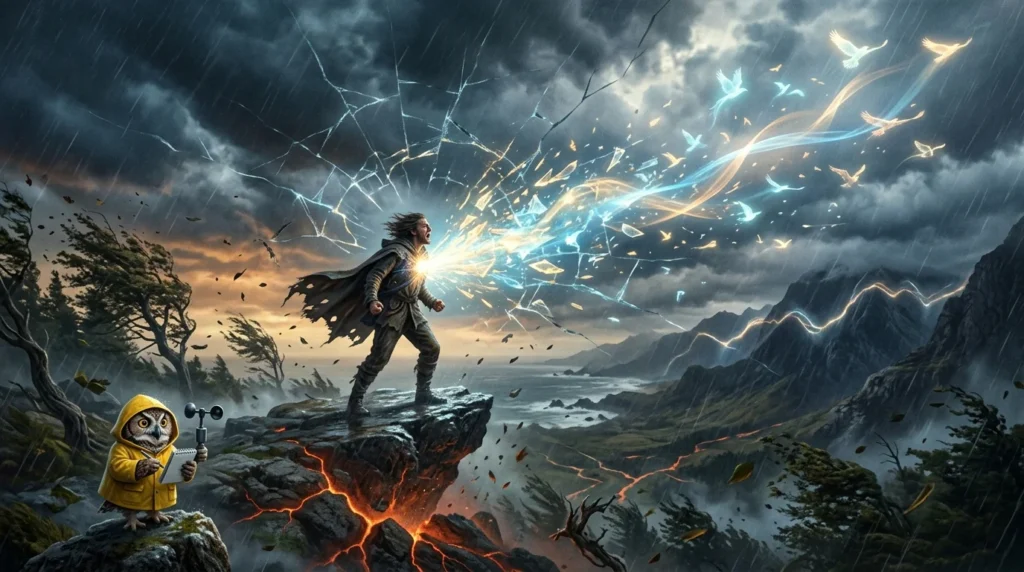
Here’s the truth: screaming in pain doesn’t always need sound. Writers often turn it into images—breaking glass, burning storms, collapsing skies—to help readers feel the emotion instead of just reading it.
In this guide, you’ll learn how this metaphor works, see powerful examples, and discover how to create your own emotional imagery with ease. Let’s step into the language of pain and expression.
What Is a Metaphor for Screaming in Pain?
A metaphor for screaming in pain is a figurative expression that describes extreme pain using images instead of literal words.
In simple terms:
It means showing pain through comparison, not direct description.
Writers use it to turn invisible emotions into visible pictures. Instead of saying “I was in pain,” they might say “my body was a breaking storm.”
Why writers use it:
- To express deep emotional suffering
- To make scenes more vivid and cinematic
- To help readers feel the moment
- To avoid flat or boring descriptions
Emotional impact:
These metaphors turn pain into something you can see, like fire, noise, weather, or collapsing objects. That tiny change creates a stronger emotional connection.
Quick List of Metaphor for Screaming in Pain Examples
Here are easy, copy-paste metaphors you can use in writing:
- A storm tearing through my bones — intense inner pain
- My body was a cracked bell — silent suffering
- Pain roared like a caged wildfire — uncontrollable agony
- My heart became shattered glass — emotional breakdown
- A thunderstorm lived inside my chest — overwhelming distress
- My soul was a burning room — emotional torment
- The pain was a sinking ship — losing control
- My scream was trapped lightning — intense but silent release
- My nerves were burning wires — sharp physical pain
- I became a broken instrument — inability to function
- Pain wrapped around me like iron chains — helpless suffering
- My body was a collapsing building — total breakdown
- The hurt was a black ocean swallowing me — deep despair
- My breath turned into shattered echoes — painful struggle
- My silence screamed louder than thunder — hidden agony
- My veins were rivers of fire — extreme burning pain
- The pain was a knife made of lightning — sudden sharp suffering
- My thoughts broke like falling stone — mental distress
- I was a storm with no sky — chaotic inner pain
- My body echoed with empty noise — emotional numbness
- Pain bloomed like a dark flower — slow suffering
- My scream was a shadow without sound — silent suffering
Beautiful Metaphors for Screaming in Pain
Some metaphors feel more poetic and emotional. These are often used in stories and poems:
- “My pain was a winter storm trapped in summer skin.”
- “Every nerve became a screaming star collapsing in space.”
- “My body was a poem written in broken thunder.”
- “The hurt inside me was a burning sky that never set.”
- “I was a river that forgot how to flow, only how to break.”
These work because they mix nature symbolism, emotional imagery, and descriptive writing into one strong picture.
Poetic and Deep Metaphor Ideas for Screaming in Pain
Writers often go deeper by blending emotion with symbolism:
- Pain as a dying sun — fading strength
- Screaming as silent fire — emotion without sound
- Broken bones as falling seasons — change through suffering
- Inner pain as collapsing stars — cosmic intensity
- Emotional agony as ink spilling in water — loss of control
Think about it this way:
Pain becomes less about the body and more about the universe inside the person.
That’s what makes poetry feel powerful.
Metaphor for Screaming in Pain in Creative Writing
In storytelling, metaphors help readers experience pain instead of just understanding it.
How writers use them:
- In fiction to show injury or trauma
- In poetry to express emotional heartbreak
- In essays to create strong imagery
- In school writing to improve descriptive marks
Example in a story:
Instead of writing:
“I was screaming in pain.”
A writer might say:
“My body became a storm with no sky, breaking itself apart in silence.”
That shift changes everything.
Metaphor vs Simile
| Feature | Metaphor | Simile |
|---|---|---|
| Meaning | Direct comparison | Uses “like” or “as” |
| Structure | “Pain was fire” | “Pain was like fire” |
| Emotional impact | Stronger, deeper | Softer, clearer |
| Example | My scream was thunder | My scream was like thunder |
| Common mistake | Too abstract sometimes | Overusing “like/as” |
Why People Confuse Metaphors and Similes
This is where many beginners get confused.
- Both compare emotions
- Both use imagery
- School lessons often mix them together
- Sentence structure feels similar
Simple rule:
If it is something → metaphor
If it is like something → simile
Real-Life Conversation Examples
Classroom example
Student: “How do I describe pain in poetry?”
Teacher: “Don’t say it directly. Say it is something else, like a storm or fire.”
🎯 Lesson: Pain becomes stronger through imagery.
Writing group
Writer 1: “I wrote: I screamed in pain.”
Writer 2: “Try: My body was a breaking sky.”
🎯 Lesson: Metaphors replace plain statements.
Social media caption
Caption: “Some pain doesn’t scream out loud, it becomes silence.”
🎯 Lesson: Quiet metaphors can be powerful.
How to Create Your Own Metaphor for Screaming in Pain
Here’s a simple trick:
- Think of the feeling (sharp, burning, heavy)
- Match it with nature (fire, storm, ocean)
- Combine emotion + image
Example:
Pain = burning + uncontrollable
Metaphor = “a wildfire inside my bones”
That’s it. Simple, but powerful.
Common Mistakes Beginners Make
- Using very complex words → makes meaning unclear
- Mixing too many images → confuses reader
- Forcing creativity → feels unnatural
- Repeating same idea → weak impact
- Using literal description → not a metaphor anymore
Fix: keep it simple, emotional, and visual.
Related Figurative Language Terms
- Simile → comparison using like/as
- Imagery → language that creates pictures in the mind
- Personification → giving human traits to things
- Symbolism → using objects to represent ideas
- Hyperbole → extreme exaggeration for effect
Frequently Asked Questions
1. What is a metaphor for screaming in pain?
It is a figurative expression that shows intense pain using images instead of literal description.
2. Why do writers use metaphors for pain?
To make emotions stronger, clearer, and more vivid for readers.
3. What is a simple example?
“My body was a storm breaking itself apart.”
4. Is it only for poetry?
No, it is used in stories, essays, and creative writing too.
5. What is the difference between metaphor and simile?
A metaphor says something is another thing, while a simile uses like or as.
6. How do I create one easily?
Match an emotion with a natural image like fire, storm, or water.
7. Can metaphors show physical pain?
Yes, they are often used to describe both physical and emotional pain.
Conclusion
A metaphor for screaming in pain is more than a writing trick—it’s a way to turn invisible suffering into something the reader can see and feel. Instead of plain words, you use storms, fire, breaking glass, and collapsing skies to carry emotion.
When you practice this skill, your writing becomes more expressive and memorable. You don’t just tell the reader about pain—you let them experience it.
Start simple. Think visually. And let emotion guide your imagery. That’s how strong writers are made.