
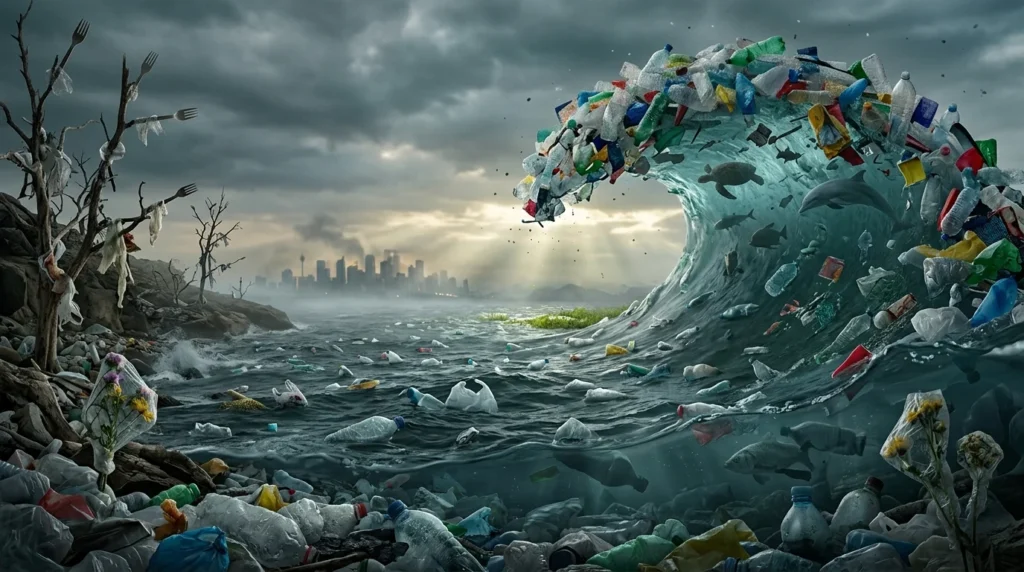
Have you ever tried to describe plastic pollution in a poem, essay, speech, or story and felt stuck using the same plain words over and over?
That happens to many writers.
Plastic pollution is hard to explain because it is more than just trash. It affects oceans, animals, cities, and even emotions. People search for a metaphor for plastic pollution because they want stronger imagery. They want writing that feels alive, emotional, and memorable.
A simple metaphor can turn an ordinary sentence into something vivid:
“Plastic pollution is a slow-moving monster swallowing the sea.”
That image instantly creates emotion.
Writers, students, poets, and social media creators often use metaphors to make environmental topics feel personal. A strong metaphor helps readers see the damage instead of just reading facts about it.
Here’s the simple trick: good metaphors connect pollution to something people already understand emotionally.
And once you learn how that works, your writing becomes far more powerful.
What Is a Metaphor for Plastic Pollution?
A metaphor for plastic pollution compares plastic waste to another object, feeling, or image without using “like” or “as.”
It is a type of figurative language used to create emotional imagery and stronger descriptive writing.
Writers use these metaphors to:
- make environmental writing more emotional
- create visual language
- add symbolism to essays and poems
- strengthen storytelling
- help readers imagine the damage more clearly
Think about it this way:
Instead of saying:
“There is too much plastic in the ocean.”
A writer could say:
“The ocean wears a choking blanket of plastic.”
That tiny change creates a stronger image.
Metaphors are common in:
- poetry
- climate writing
- speeches
- school assignments
- environmental campaigns
- creative writing
- social media captions
They help transform facts into feelings.
Quick List of Metaphor for Plastic Pollution Examples
- Plastic pollution is a silent tsunami — spreading everywhere slowly
- A plastic graveyard — lifeless piles of waste
- The ocean’s choking chain — harmful entanglement
- A synthetic plague — pollution spreading like disease
- Plastic scars on Earth — lasting environmental damage
- The sea’s invisible predator — hidden danger to wildlife
- A poison snowstorm — tiny plastic pieces falling everywhere
- An endless plastic river — nonstop waste flow
- A suffocating blanket — covering nature
- Earth’s artificial wound — damage caused by humans
- A toxic tide — dangerous waves of pollution
- Plastic vines strangling nature — pollution overtaking ecosystems
- A man-made monster — created but now uncontrollable
- The ocean’s plastic prison — trapping sea animals
- A floating cemetery — dead zones filled with trash
- Plastic rain — microplastics everywhere
- A chemical shadow — pollution following humanity
- The Earth’s slow fever — environmental suffering
- An immortal stain — plastic lasting for centuries
- A cage of convenience — short-term comfort causing long-term harm
- A synthetic flood — overwhelming the planet
- Plastic smoke without fire — unseen destruction
- A glittering curse — attractive but harmful materials
- A concrete disease of the sea — unnatural invasion
- The lungs of the ocean filling with plastic — environmental suffocation
Beautiful Metaphors for Plastic Pollution
Some metaphors are painful. Others are strangely beautiful.
That contrast often creates the strongest poetic expression.
1. “Plastic pollution is a ghost floating beneath the waves.”
This metaphor creates haunting imagery. It suggests something invisible, lingering, and impossible to fully escape.
2. “The shoreline wears necklaces of broken plastic.”
This gives human qualities to nature through subtle personification.
It also creates visual imagery readers can picture instantly.
3. “Plastic bags drift like forgotten spirits across the sea.”
Many poets use this style because it mixes sadness with motion.
4. “The ocean breathes through clogged lungs.”
This metaphor feels emotional because readers connect oceans to living creatures.
5. “Plastic is the glitter of human carelessness.”
That sentence sounds soft at first. Then the meaning hits harder.
Poetic and Deep Metaphor for Plastic Pollution Ideas
These examples use symbolism, emotional imagery, and literary-style writing.
Nature-Inspired Metaphors
- “Plastic flowers bloom where coral once lived.”
- “Rivers carry humanity’s fingerprints to the sea.”
- “The waves whisper through fields of plastic bones.”
- “Microplastics drift like poisoned pollen.”
Dark and Beautiful Imagery
- “The ocean is swallowing shards of civilization.”
- “Plastic hangs from trees like synthetic fruit.”
- “The beach sparkles with humanity’s mistakes.”
- “Sea turtles swim through transparent traps.”
Fantasy-Style Metaphors
- “Plastic pollution is a curse cast upon the oceans.”
- “The sea dragon sleeps beneath a blanket of bottles.”
- “The kingdom of coral slowly turns to plastic stone.”
- “Dark tides carry the relics of human greed.”
Emotional Metaphors
- “Plastic pollution is guilt that never disappears.”
- “Every bottle is a memory the Earth cannot forget.”
- “The ocean cries in fragments of plastic.”
- “Nature wears humanity’s trash like chains.”
Metaphor for Plastic Pollution in Creative Writing
Most writers use metaphors because plain descriptions often feel weak.
A metaphor creates emotion, symbolism, and stronger imagery all at once.
In Storytelling
A writer might describe a polluted city this way:
“Plastic clung to the streets like a second skin.”
That line makes the setting feel more alive.
In Poetry
Poets often connect pollution to sadness or loss:
“The sea once sang in blue,
now it coughs in plastic silence.”
Short. Emotional. Visual.
In School Assignments
Teachers usually want students to show creativity and understanding.
Example:
“Plastic pollution is a ticking clock buried beneath the waves.”
This metaphor suggests danger growing over time.
In Social Media Captions
Short metaphors work well online because they are memorable.
Examples:
- “Our oceans are drowning in convenience.”
- “Plastic never forgets.”
- “The sea deserves better than our leftovers.”
Metaphor vs Simile
| Feature | Metaphor | Simile |
|---|---|---|
| Meaning | Direct comparison | Comparison using “like” or “as” |
| Grammar | Says something is another thing | Says something is like another thing |
| Emotional Impact | Usually stronger | Usually softer |
| Example | “Plastic pollution is a disease.” | “Plastic pollution spreads like a disease.” |
| Imagery Strength | More powerful and symbolic | More descriptive and simple |
| Beginner Mistake | Making comparisons confusing | Overusing “like” repeatedly |
Why People Confuse Metaphors and Similes
This is where many beginners get confused.
Both metaphors and similes compare things.
The difference is simple:
- A simile uses “like” or “as.”
- A metaphor does not.
Example:
Simile
“Plastic floated like dead leaves.”
Metaphor
“Plastic became dead leaves across the sea.”
Many students accidentally mix the two forms together.
Another common mistake is making metaphors too literal.
Weak metaphor:
“Plastic pollution is bad for oceans.”
That is just a statement.
Stronger metaphor:
“Plastic pollution is a net tightening around marine life.”
That sentence creates imagery and symbolism.
Real-Life Conversation Examples
1. Classroom Discussion
Student: “I need a stronger line for my essay.”
Teacher: “Try turning the pollution into an image.”
Student: “Maybe plastic pollution is a wound on the planet?”
🎯 Lesson: Metaphors create emotional impact.
2. Poetry Writing
Friend: “Your poem feels flat.”
Writer: “What if I describe plastic as a ghost haunting the ocean?”
🎯 Lesson: Poetic language adds atmosphere.
3. Social Media Caption
Person: “I want a short environmental caption.”
Friend: “Use something symbolic.”
Caption: “The ocean should not wear our trash.”
🎯 Lesson: Short metaphors can feel powerful.
4. Storytelling Scene
Writer: “The beach description sounds boring.”
Editor: “Give the pollution personality.”
Writer: “Plastic claws reached across the sand.”
🎯 Lesson: Personification strengthens imagery.
How to Create Your Own Metaphor for Plastic Pollution
You do not need to be a professional poet.
Most strong metaphors start with observation.
1. Picture the Pollution Clearly
Ask yourself:
- What does it look like?
- What emotion does it create?
- What does it remind you of?
2. Connect It to Something Emotional
Good metaphors often connect pollution to:
- disease
- monsters
- storms
- chains
- scars
- ghosts
- prisons
3. Use Symbolism
Plastic often symbolizes:
- waste
- consumerism
- neglect
- permanence
- environmental damage
4. Keep It Simple
Many beginners try to sound overly poetic.
Simple imagery usually works better.
Instead of:
“A catastrophic synthetic manifestation of ecological despair.”
Try:
“Plastic is a shadow covering the sea.”
Shorter. Stronger. Clearer.
Common Mistakes Beginners Make
Using Clichés
❌ “Plastic pollution is bad.”
Why it happens:
People describe facts instead of imagery.
✅ Better:
“Plastic pollution is a stain the ocean cannot wash away.”
Mixing Too Many Images
❌ “Plastic pollution is a monster storm prison.”
Why it happens:
Beginners combine random symbols.
✅ Better:
“Plastic pollution is a cage around marine life.”
Making Metaphors Too Long
❌ Writing huge confusing comparisons
Why it happens:
Trying too hard to sound literary.
✅ Better:
“Plastic bottles floated like forgotten memories.”
Forgetting Emotion
❌ “Plastic pollution is trash.”
Why it happens:
No emotional imagery.
✅ Better:
“Plastic pollution is humanity’s fingerprint on nature.”
Related Figurative Language Terms
Simile
A comparison using “like” or “as.”
Example:
“Plastic spread like a dark tide.”
Imagery
Language that helps readers see, hear, or feel something.
Example:
“Shredded plastic glittered along the shoreline.”
Personification
Giving human qualities to objects or nature.
Example:
“The ocean begged for air.”
Symbolism
Using objects or ideas to represent deeper meaning.
Plastic often symbolizes waste, consumerism, or environmental neglect.
Hyperbole
Intentional exaggeration.
Example:
“Plastic covered every inch of the planet.”
Famous Environmental Symbolism in Literature
Environmental writers often use nature symbolism to create emotional impact.
In many poems and novels, polluted water represents:
- human greed
- loss of innocence
- broken harmony with nature
- forgotten responsibility
Modern climate writing uses plastic as a symbol of permanence because plastic lasts for hundreds of years.
That symbolic meaning makes it powerful in creative writing and poetic language.
Frequently Asked Questions
What is a metaphor for plastic pollution?
A metaphor for plastic pollution compares plastic waste to another image or idea to create stronger emotional meaning.
What is the best metaphor for plastic pollution?
One powerful example is:
“Plastic pollution is a choking blanket covering the Earth.”
How do you describe plastic pollution creatively?
Use figurative language, imagery, symbolism, and emotional comparisons instead of plain facts.
Is “plastic pollution is a disease” a metaphor?
Yes. It directly compares pollution to a disease without using “like” or “as.”
Why do writers use metaphors about pollution?
Metaphors make environmental problems feel emotional, visual, and memorable.
What figurative language works best for climate writing?
Metaphors, imagery, symbolism, and personification are commonly used.
Can students use metaphors in school essays?
Yes. Teachers often encourage metaphors because they improve descriptive writing and creativity.
What makes a metaphor powerful?
Strong metaphors create clear imagery and emotional connection while staying simple and easy to understand.
Conclusion
Learning how to create a strong metaphor for plastic pollution can completely change your writing.
A simple comparison can turn facts into feelings. It can help readers picture polluted oceans, damaged wildlife, and the emotional weight behind environmental problems.
The best metaphors are not always complicated.
Sometimes the strongest line is also the simplest:
“The ocean should not carry our mistakes.”
Keep experimenting with imagery, symbolism, and poetic language. The more you practice, the more natural your creative writing will feel.
And once you begin seeing the world through metaphor, ordinary sentences suddenly become unforgettable.