
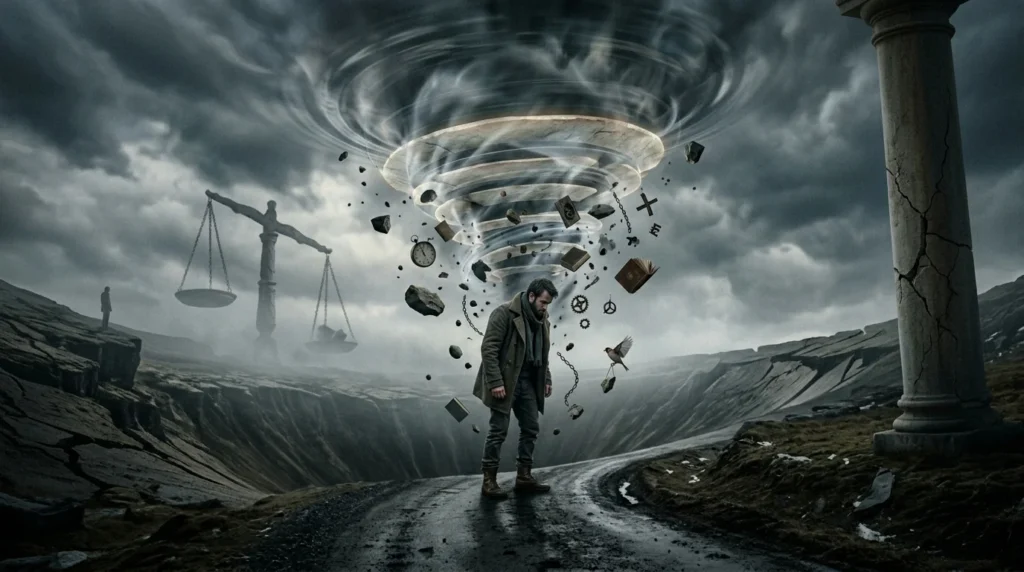
Sometimes you try to describe a feeling, but simple words just don’t work. You feel tired, stressed, or emotionally drained, and you say, “It feels heavy.” That’s where a metaphor for heavy weight becomes powerful in writing.
Writers often search for a metaphor for heavy weight when they want to describe emotions like sadness, pressure, responsibility, or grief. It helps turn invisible feelings into something we can almost touch or carry in our minds.
Most beginners get confused here. They think “heavy” only means physical weight like a bag or stone. But in creative writing, it often means emotional load—something pressing on the heart or mind.
Think about it this way: language becomes more alive when we stop saying what things are and start saying what they feel like. That’s where metaphors begin to shine. Let’s explore how this simple idea can transform your writing completely.
What Is a Metaphor for Heavy Weight?
A metaphor for heavy weight is a figurative expression that describes emotional, mental, or physical pressure as something heavy that must be carried.
Simple definition (snippet-ready):
A metaphor for heavy weight is when feelings or responsibilities are described as something physically heavy to express pressure or burden.
Writers use this because it makes emotions easier to imagine. Instead of saying “I feel stressed,” you can say “I am carrying a mountain on my shoulders.”
It creates imagery, symbolism, and strong emotional impact in creative writing, poetry, and storytelling.
Real-world example:
- “Her grief was a stone in her chest.”
This doesn’t mean a real stone exists. It means the sadness feels solid, painful, and hard to remove.
That tiny shift is what makes metaphors so powerful.
Quick List of Metaphor for Heavy Weight Examples
Here are simple, emotional, and creative examples you can use in writing:
- A mountain on my shoulders — overwhelming responsibility
- A bag of stones in my heart — emotional pain
- An anchor in my chest — sadness holding me down
- A lead blanket over my mind — mental fatigue
- Chains wrapped around my thoughts — anxiety or stress
- A backpack full of rocks — daily pressure
- A sinking ship inside me — emotional collapse
- A brick wall on my soul — emotional blockage
- A gravity pulling me down — depression or exhaustion
- A suitcase too heavy to carry — life responsibilities
- A storm sitting on my heart — emotional chaos
- A boulder in my chest — grief or heartbreak
- A weight I can’t drop — unresolved guilt
- A steel hand pressing on me — intense pressure
- A dark ocean pulling me under — emotional struggle
- A sky falling on my thoughts — overwhelming fear
- A chain of iron memories — painful past
- A furnace on my shoulders — stress and burnout
- A heavy curtain over my mind — confusion or fog
- A locked safe of pain — buried emotions
Beautiful Metaphors for Heavy Weight
Some metaphors feel softer and more poetic. These are great for stories, poems, or emotional writing.
- “My sorrow is a sleeping giant.”
- “His guilt is a shadow that never leaves.”
- “Her worries are stones sinking in water.”
- “My mind is a room filled with locked doors.”
- “The silence between us is a heavy fog.”
These examples work because they use symbolism and imagery instead of direct explanation.
Think about it this way:
Heavy weight doesn’t always look like weight. Sometimes it looks like silence, fog, or darkness.
Poetic and Deep Heavy Weight Ideas
Now let’s go deeper into artistic writing.
Writers often turn heavy weight into emotional landscapes:
- “The night pressed its palm on my chest.”
→ Symbol of emotional pressure and loneliness - “My thoughts dragged iron chains through the dark.”
→ Mental struggle and anxiety - “Every memory sat on me like wet sand.”
→ Emotional heaviness from the past - “Time turned into stone inside me.”
→ Feeling stuck and frozen in life
These metaphors don’t just describe—they paint feelings.
Heavy Weight in Creative Writing
In creative writing, a metaphor for heavy weight helps express:
- grief and loss
- stress and anxiety
- responsibility
- guilt
- emotional burnout
Example in storytelling:
“She walked into the room, but her silence was heavier than her footsteps.”
Example in poetry:
“My heart wears a coat of iron, stitched with memories I cannot fold away.”
Writers use these because they create emotional imagery that readers feel instantly.
Metaphor vs Simile
| Feature | Metaphor | Simile |
|---|---|---|
| Meaning | Direct comparison | Uses “like” or “as” |
| Example | “My heart is a stone.” | “My heart is like a stone.” |
| Emotional impact | Stronger, deeper | Softer, clearer |
| Grammar style | Direct statement | Comparative phrase |
| Beginner mistake | Mixing literal meaning | Overusing “like/as” |
Why People Confuse Metaphors and Similes
This is where many beginners get stuck.
They confuse them because both compare things. But the structure is different.
- A metaphor becomes the thing
- A simile compares the thing
Example confusion:
- ❌ “My sadness is like a mountain” (simile)
- ✔ “My sadness is a mountain” (metaphor)
Once you see this difference, writing becomes much clearer.
Real-Life Conversation Examples
1. Classroom discussion
Teacher: “How do you describe stress creatively?”
Student: “My stress is a backpack full of rocks.”
🎯 Lesson: Metaphors make emotions visual.
2. Poetry workshop
Writer: “My grief is a locked door.”
Mentor: “That image feels powerful and quiet.”
🎯 Lesson: Symbolism creates emotional depth.
3. Social media caption
User: “Monday feels like a mountain on my shoulders.”
Friend: “That’s so real.”
🎯 Lesson: Everyday metaphors connect easily.
4. Storytelling moment
Character: “I can’t breathe, it’s like a weight in my chest.”
🎯 Lesson: Physical feelings express emotion.
How to Create Your Own Metaphor for Heavy Weight
Here’s the simple trick:
- Think of the feeling (stress, sadness, pressure)
- Imagine something physically heavy
- Connect them in one image
Easy method:
- Emotion → object
- Pressure → weight
- Mind → physical space
Example creation:
Feeling: anxiety
Object: chains
Final metaphor: “My anxiety is a chain around my thoughts.”
That’s it. Simple but powerful.
Common Mistakes Beginners Make
- Saying too many metaphors in one sentence
→ Confuses the reader - Using literal heavy objects only
→ Limits creativity - Over-explaining the metaphor
→ Reduces emotional impact - Mixing simile and metaphor incorrectly
→ Weakens clarity
Correct version is always simple and direct.
Related Figurative Language Terms
- Simile: comparison using “like/as”
- Imagery: language that creates mental pictures
- Personification: giving human traits to objects
- Symbolism: using objects to represent ideas
- Hyperbole: extreme exaggeration for effect
All of these work together with metaphors in creative writing.
Frequently Asked Questions
1. What is a metaphor for heavy weight?
It is a figurative expression that describes emotional or mental pressure as something physically heavy.
2. Why do writers use heavy weight metaphors?
To show emotional stress or burden in a visual and powerful way.
3. Is “my heart is heavy” a metaphor?
Yes, it is a common emotional metaphor.
4. What is a strong example?
“My grief is a mountain on my shoulders.”
5. Can metaphors describe emotions?
Yes, they are often used for emotions like sadness, stress, and guilt.
6. What is the difference between heavy metaphor and simile?
Metaphor says something is something; simile says it is like something.
Optional Authority Insight
In literature, heavy weight metaphors often appear in poetry about grief and human struggle. Poets use physical weight to express emotional depth because humans naturally understand pressure through the body.
This is why phrases like “burden of sorrow” or “weight of time” appear across centuries of writing.
Conclusion
A metaphor for heavy weight is more than just a writing trick—it’s a way to turn invisible emotions into something readers can feel. Whether it’s a mountain on your shoulders or chains in your thoughts, these images help language become alive.
When you learn to use them, your writing stops being plain and starts becoming emotional, visual, and memorable. Try creating your own today—you might be surprised how naturally powerful your words become.