
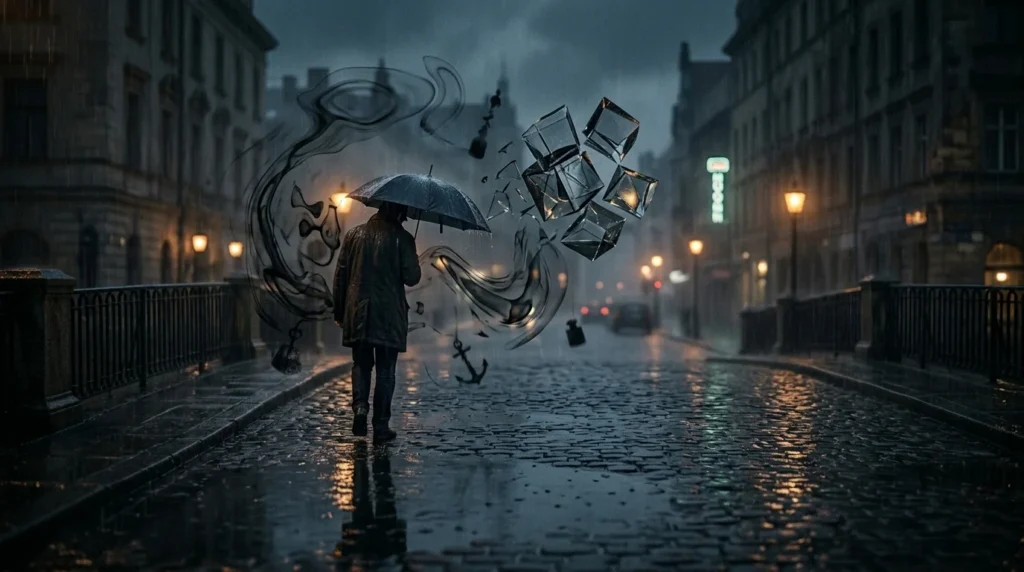
Sometimes you don’t just feel bad—you feel like words can’t catch it. Maybe your heart feels heavy, or your thoughts move like slow rain. This is exactly where the idea of a metaphor for feeling bad becomes powerful in writing. People search for this because plain words like “sad” or “upset” don’t always show the real depth of emotion.
Think about a student trying to write a story or poem. They know the feeling, but the words feel too small. That’s when metaphors help. They turn invisible emotions into something you can see, feel, and imagine.
Instead of saying “I feel bad,” a writer might say, “I’m carrying a storm inside my chest.” That tiny change creates a stronger image. It makes the reader feel the emotion instead of just reading about it.
In this guide, we’ll explore simple and beautiful ways to understand and create metaphors for feeling bad—so your writing becomes more alive, more human, and more expressive.
What Is a Metaphor for Feeling Bad?
A metaphor for feeling bad is a way of describing sadness or emotional pain by saying it is something else.
Simple definition (featured snippet):
A metaphor for feeling bad is a figure of speech that compares sadness or emotional discomfort to another object, feeling, or situation without using “like” or “as.”
Writers use it because emotions are hard to explain directly. Metaphors help turn feelings into pictures.
For example:
- “My heart is a stone.”
- “I am a broken window inside.”
- “Sadness is a heavy coat I can’t take off.”
These are not literal. But they feel real.
In creative writing, metaphors make emotions stronger. In poetry, they add beauty. In storytelling, they help readers connect deeply with characters.
That’s why emotional writing often depends on figurative language like metaphors, imagery, symbolism, and personification.
Quick List of Metaphor for Feeling Bad Examples
Here are easy, copy-paste metaphors you can use:
- My heart is a stone sinking in water. (heavy sadness)
- I am a broken window in the rain. (fragile emotions)
- Sadness is a dark cloud stuck above me. (constant mood)
- I feel like an empty house. (loneliness)
- My thoughts are tangled wires. (confusion + stress)
- I am a fading light. (loss of hope)
- My emotions are a storm without an end. (overwhelming feelings)
- I carry a backpack of rocks. (emotional burden)
- My smile is a mask that slips. (hidden sadness)
- I am a wilted flower. (drained energy)
- My mind is a cold, empty room. (emotional emptiness)
- I feel like paper burned at the edges. (hurt and fragility)
- My joy is a candle in the wind. (unstable happiness)
- I am a ship lost in fog. (confusion, emotional loss)
- My heart is a locked door with no key. (blocked emotions)
Each one turns “feeling bad” into something visual and emotional.
Beautiful Metaphors for Feeling Bad
Here are more poetic and emotionally rich versions:
- “I am the last leaf on a winter tree.”
- “My soul is a sky that forgot the sun.”
- “Sadness sits in me like an old, quiet house.”
- “I am a song that lost its melody.”
- “My heart is a river flowing backward.”
These metaphors feel softer and more literary. Writers often use them in poetry because they create emotional imagery instead of direct explanation.
That’s the simple trick: don’t name the feeling—show it as something living.
Poetic and Deep Metaphor for Feeling Bad Ideas
This is where writing becomes more artistic.
- “I am ink spilled on a forgotten page.”
- “My sadness is a slow snowfall inside my chest.”
- “I am a painting washed out by rain.”
- “My heart is a cracked mirror holding old reflections.”
- “I am a lighthouse with no light left.”
These examples carry symbolism. They don’t just describe sadness—they suggest history, loss, and silence.
That’s what makes poetry powerful. It speaks in images, not explanations.
Metaphor for Feeling Bad in Creative Writing
Writers use metaphors to build emotional depth in:
- stories
- poems
- essays
- character development
Instead of saying:
“She felt sad.”
You can write:
“Sadness folded around her like winter air.”
That version feels alive.
Another example:
“He didn’t speak. His silence was a closed room.”
Metaphors help readers step inside emotions instead of watching them from outside.
They also work well in school assignments because teachers look for descriptive writing and figurative language.
Metaphor vs Simile
Here’s a simple comparison:
| Feature | Metaphor | Simile |
|---|---|---|
| Meaning | Says something is something else | Compares using “like” or “as” |
| Strength | Stronger emotional impact | Softer comparison |
| Example | “I am a storm.” | “I am like a storm.” |
| Writing use | Poetry, deep emotion | Basic description |
| Mistake | Can feel too abstract if unclear | Can feel less powerful |
Metaphors hit deeper because they remove distance between feeling and image.
Why People Confuse Metaphors and Similes
This is a common beginner mistake.
Here’s why it happens:
- Both describe emotions
- Both use comparisons
- School lessons mix them together
- Students rely on “like/as” automatically
So a learner might write:
“I feel bad like a storm.”
But a metaphor would be:
“I am a storm.”
That tiny difference changes the emotional strength completely.
Real-Life Conversation Examples
1. Classroom writing task
Student: “I don’t know how to describe feeling sad.”
Teacher: “Try saying your sadness is something, not like something.”
Student: “Oh… like ‘my sadness is a dark cloud’?”
🎯 Lesson: Metaphors remove “like” and make emotion direct.
2. Poetry discussion
Friend A: “My poem feels boring.”
Friend B: “Add a metaphor—make your sadness an object.”
Friend A: “Like what?”
Friend B: “A locked door maybe.”
🎯 Lesson: Objects create emotion.
3. Social media caption
User: “I want to post something deep.”
Friend: “Say ‘I am a fading light.’”
User: “That hits hard.”
🎯 Lesson: Short metaphors work best online.
How to Create Your Own Metaphor for Feeling Bad
Here’s the simple trick:
- Think of your emotion
- Ask: “What does this feeling look like?”
- Pick an object or weather
- Connect them directly
Examples:
- sadness → rain, broken glass, empty room
- stress → storm, tangled rope
- loneliness → empty house, silent road
Now build:
“I am + object”
That’s it.
Try:
- I am a storm with no sky.
- I am a clock that forgot time.
Common Mistakes Beginners Make
- Using “like” (turns metaphor into simile)
- Choosing unclear images
- Overcomplicating sentences
- Mixing too many ideas
- Forgetting emotional connection
Correct version is always simple:
“I am a heavy sky.”
Not:
“I am like a heavy sky that feels kind of sad sometimes.”
Related Figurative Language Terms
- Simile – comparison using like/as
- Imagery – language that creates pictures
- Personification – giving human traits to objects
- Symbolism – objects representing deeper meaning
- Hyperbole – extreme exaggeration
These tools often work together in emotional writing.
Frequently Asked Questions
1. What is a simple metaphor for feeling bad?
“I am a storm inside” is a simple emotional metaphor.
2. Why do writers use metaphors for sadness?
They make emotions easier to visualize and feel.
3. Can metaphors improve my writing grades?
Yes, they show creativity and strong descriptive skills.
4. What is a poetic metaphor for feeling bad?
“My heart is a fading light in winter.”
5. Is “I am like a storm” a metaphor?
No, it is a simile because it uses “like.”
6. How do I write better emotional metaphors?
Use simple objects and connect them directly to feelings.
7. Can metaphors be used in social media posts?
Yes, short metaphors work very well online.
Symbolism in Literature of Sadness
In literature, sadness is often shown through symbols like rain, winter, darkness, and empty rooms. These symbols quietly tell readers about emotional states without explaining them directly.
Writers like to use this because it lets readers feel instead of just understand.
Conclusion
A metaphor for feeling bad is more than a writing trick—it’s a way to turn invisible emotions into something real and visible. When you say “I am a storm” instead of “I feel bad,” you are not just describing emotion—you are painting it.
The best metaphors are simple, honest, and full of imagination. You don’t need complex words. You just need the right image that matches your feeling.
Once you start thinking in metaphors, your writing becomes deeper, more expressive, and more human. And slowly, even difficult emotions become easier to understand and share.