
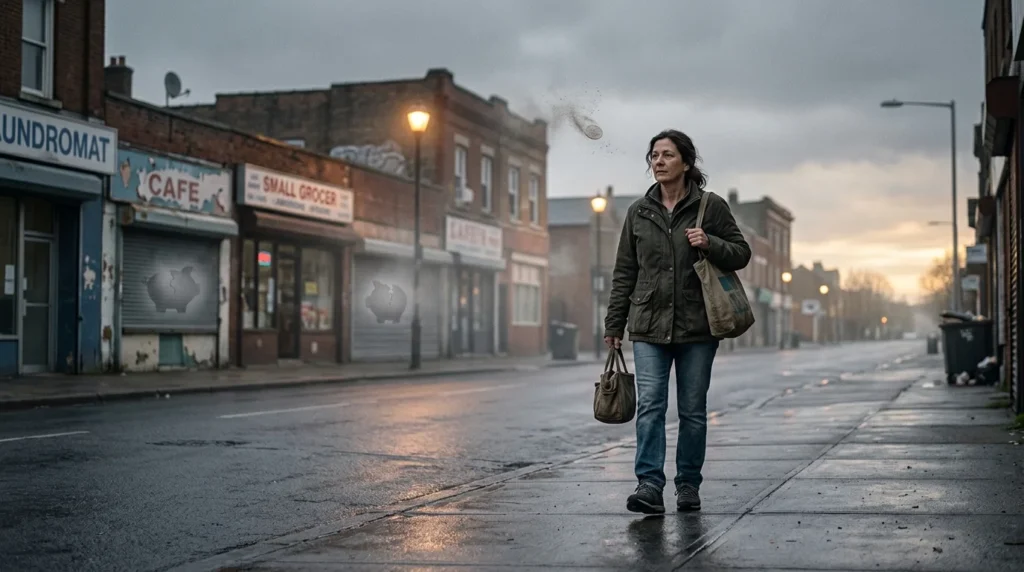
When students sit down to write poetry or a story about struggle, one phrase often comes to mind: metaphor for being poor. They know what poverty feels like in real life, but they struggle to turn that feeling into powerful words. That is where metaphors quietly step in and do their magic.
Being poor is not just about money. It can feel like empty cupboards, silent mornings, or dreams that feel too far away. Writers use metaphors for being poor to show these emotions without directly saying “I have no money.” Instead, they paint pictures that readers can feel.
But here’s the tricky part. Many beginners either use very simple phrases or they overthink and make it confusing. The truth is, a good metaphor is just a small emotional picture that carries a big meaning.
In this guide, you’ll learn how writers turn poverty into poetic language, how metaphors really work, and how you can create your own strong, emotional expressions that feel real and human.
Let’s step into the world where words become images.
What Is a Metaphor for Being Poor?
A metaphor for being poor is a creative comparison that describes poverty without directly saying it. It uses symbolic language to show lack, struggle, or emptiness in a more emotional and visual way.
In simple words:
A metaphor says “this is that” to create meaning.
Writers use it because it makes emotional experiences easier to feel, not just understand.
For example:
- “His wallet was a barren desert.”
- “Their home was a fridge without light.”
These lines don’t just tell you someone is poor—they help you see it.
That is the power of figurative language. It turns facts into feelings.
Quick List of Metaphor for Being Poor Examples
Here are simple, emotional, and creative metaphors you can copy or learn from:
- “A wallet full of silence” — no money, no movement
- “Life with empty pockets” — constant lack
- “A house with cold walls” — poverty and loneliness
- “A table without food” — hunger and struggle
- “A sky without stars” — lost hope
- “A broken bridge to dreams” — blocked opportunities
- “A desert of coins” — financial emptiness
- “A bank account in winter” — frozen money flow
- “A garden with no harvest” — hard work without reward
- “A cup that never fills” — constant shortage
- “A shadow of wealth” — living in lack
- “A book with missing pages” — incomplete life
- “A road with no destination” — uncertain future
- “A lamp without oil” — life without support
- “A river dried by the sun” — income gone
- “A nest without warmth” — poor living conditions
- “A clock stuck at zero” — no progress
- “A field without rain” — no growth
- “A pocket full of air” — absolute emptiness
- “A storm without shelter” — exposed struggle
Beautiful Metaphors for Being Poor
Some metaphors feel softer and more emotional:
- “He carried dreams in torn pockets.” — hope despite poverty
- “Her life was stitched with missing threads.” — incomplete stability
- “They lived under a roof made of waiting.” — constant struggle
- “Money was a guest that never stayed.” — unstable income
- “Their happiness wore worn-out shoes.” — hardship in daily life
Think about it this way:
These metaphors don’t just show poverty—they show human emotion inside poverty.
That tiny change creates a stronger image.
Poetic and Deep Metaphor for Being Poor Ideas
Writers often go deeper when they want emotional impact:
- “Poverty is a long night with no sunrise.”
- “Their hope was a candle fighting the wind.”
- “The world gave them locked doors without keys.”
- “Their laughter lived in borrowed light.”
- “Dreams were birds without wings.”
This is where symbolism becomes powerful. Poverty becomes not just money—it becomes darkness, silence, distance, and waiting.
Metaphor for Being Poor in Creative Writing
Writers use these metaphors in many ways:
In stories, they show character struggles:
- “He walked with empty pockets but a heavy heart.”
In poetry, they express emotion:
- “My life is a wallet with no tomorrow.”
In descriptive writing, they build setting:
- “The house stood like a tired memory.”
In school assignments, they help earn better marks because they show creativity and figurative language use.
Mini example:
“She smiled, but her smile was a house without furniture.”
Metaphor vs Simile
| Feature | Metaphor | Simile |
|---|---|---|
| Meaning | Direct comparison | Uses “like” or “as” |
| Grammar | A is B | A is like B |
| Emotion | Stronger, deeper | Softer comparison |
| Example | “Poverty is a prison.” | “Poverty is like a prison.” |
| Impact | More poetic | More descriptive |
Beginners often mix them up, but the difference is simple: metaphors become something, similes only compare.
Why People Confuse Metaphors and Similes
This confusion happens because:
- Both compare ideas
- School lessons mix examples
- Students focus on words like “like” and “as”
- Writing feels similar at first
Most beginners think:
“If it compares, it must be the same thing.”
But actually, metaphor removes comparison words and makes it stronger.
Real-Life Conversation Examples
School Dialogue 1
Teacher: “Write a metaphor for being poor.”
Student: “Can I say ‘my wallet is a desert’?”
Teacher: “Yes, that shows emptiness clearly.”
🎯 Lesson: Metaphors turn feelings into images.
Classroom Dialogue 2
Student A: “I wrote: poverty is a dark night.”
Student B: “That sounds deep!”
🎯 Lesson: Simple words can create strong emotion.
Poetry Writing Chat
Writer: “My life feels empty.”
Mentor: “Try: ‘My life is an empty glass.’”
🎯 Lesson: Show, don’t just tell.
Social Media Caption
User: “How do I sound poetic?”
Friend: “Say: ‘Dreams in empty pockets.’”
🎯 Lesson: Short metaphors work best online.
How to Create Your Own Metaphor for Being Poor
Here’s a simple trick:
- Think of poverty as a feeling (empty, cold, slow)
- Match it with an object (wallet, house, road, sky)
- Combine them creatively
Examples:
- Empty + wallet → “wallet of silence”
- Cold + house → “cold-walled life”
- Lost + road → “road without direction”
This is where creativity begins.
Common Mistakes Beginners Make
- Saying something too direct (“I am poor”) — no metaphor used
- Using complicated words — makes meaning unclear
- Overloading sentences — weakens impact
- Copying common phrases — reduces originality
- Mixing simile and metaphor incorrectly
Fix: Keep it simple, visual, and emotional.
Related Figurative Language Terms
- Simile — comparison using like/as
- Imagery — language that creates pictures in the mind
- Personification — giving human traits to objects
- Symbolism — using objects to represent ideas
- Hyperbole — exaggerated expression for effect
These tools often work together in creative writing.
Frequently Asked Questions
1. What is a metaphor for being poor?
It is a creative comparison that shows poverty using symbolic or emotional images.
2. Why do writers use metaphors for poverty?
To express emotion more deeply than simple statements.
3. Can I use metaphors in school essays?
Yes, they improve creativity and writing marks.
4. What is a simple example?
“My wallet is empty silence.”
5. Are metaphors better than similes?
Metaphors are usually stronger and more emotional.
6. Can metaphors be sad?
Yes, they often express struggle or hardship.
7. How do I start writing one?
Think of an object and connect it with emptiness or lack.
Conclusion
Metaphors for being poor are not just writing tricks—they are emotional bridges. They help us turn real-life struggle into images that others can feel and understand. Instead of saying “I have no money,” a metaphor says something deeper, like “my pockets carry silence.”
When you learn to use these expressions, your writing becomes more powerful, more human, and more memorable. You start to see that even difficult experiences can become beautiful language.
So next time you write, don’t just describe poverty—paint it.