
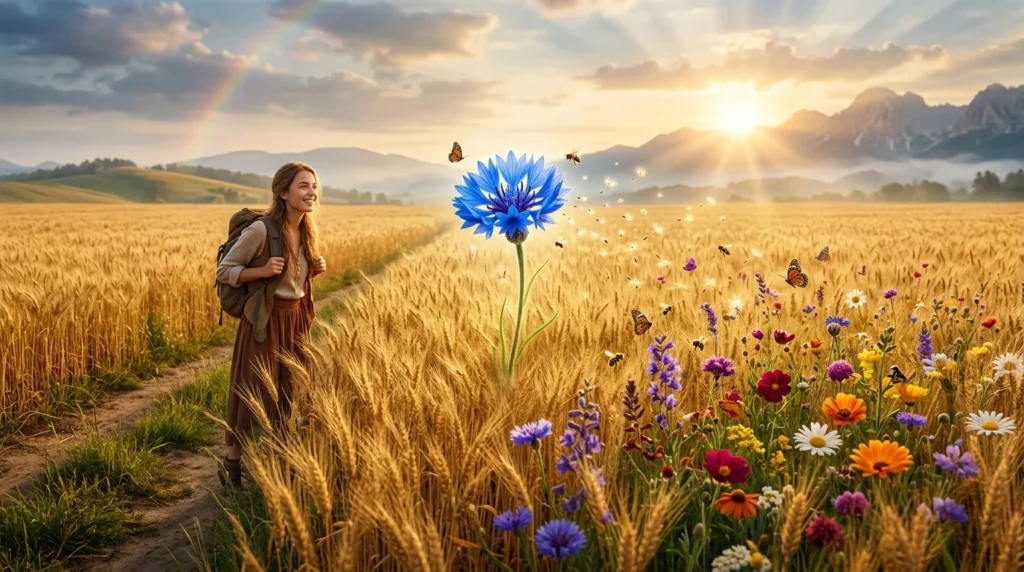
Have you ever written a story or poem and felt stuck trying to describe someone who doesn’t “fit in”? Maybe a student in class who thinks in a unique way, or a character who stands out like they belong to another world. This is where the idea of a metaphor for being different becomes powerful.
People often search for metaphor for being different because they want to express uniqueness in a deeper, more emotional way. Not just “he is different,” but something that shows difference through image and feeling.
This is where language becomes art.
Think about it this way: instead of saying someone is unique, you might say they are “a wildflower growing through concrete.” That tiny shift creates emotion, imagery, and meaning all at once.
In this article, you’ll learn simple, beautiful, and creative metaphors that express difference in ways that feel alive, poetic, and memorable. 🌿 Let’s explore how writers turn uniqueness into powerful imagery.
What Is a Metaphor for Being Different?
A metaphor for being different is a figurative expression that describes uniqueness by comparing a person or thing to something else that stands out.
Simple definition (featured snippet style):
A metaphor for being different is a creative comparison that shows someone’s uniqueness without using “like” or “as.”
Writers use it because it makes language feel emotional and visual. Instead of explaining difference directly, metaphors paint a picture.
For example:
- “She is a lighthouse in a sea of candles.”
- “He is a puzzle piece that doesn’t match the box—but creates a new picture.”
These lines don’t just inform. They make you feel difference.
In creative writing, figurative language like metaphor, simile, and symbolism helps readers connect emotionally with characters and ideas.
Quick List of Metaphor for Being Different Examples
Here are easy, copy-ready metaphors you can use in writing:
- A rainbow in a black-and-white world — stands out beautifully
- A wildflower in a garden of roses — unique beauty
- A lone star in daylight — rare and unseen brilliance
- A broken clock that tells its own time — different thinking
- A book written in a secret language — misunderstood uniqueness
- A river that refuses to flow downhill — independent spirit
- A flame burning blue in a field of orange fire — unusual identity
- A puzzle piece from another sky — doesn’t fit normal patterns
- A bird singing in a silent forest — expressive individuality
- A lighthouse in a desert — unexpected guidance
- A comet passing through still skies — rare presence
- A drum beating to a different heartbeat — nonconformity
- A tree growing sideways into light — unconventional growth
- A mirror that reflects a different world — unique perspective
- A snowflake that never melts the same way — one-of-a-kind nature
- A violin in a world of drums — soft uniqueness
- A painting in a world of sketches — full expression
- A seed growing in stone — impossible resilience
Each metaphor adds emotional depth instead of plain description.
Beautiful Metaphors for Being Different
Some metaphors feel soft and emotional, almost like poetry:
- “She is a moonflower blooming only at night.”
→ Suggests hidden beauty and quiet uniqueness - “He is a compass spinning without north.”
→ Suggests freedom from rules - “They are ink spilled on a page of order.”
→ Suggests creative disruption - “She is wind moving against still trees.”
→ Suggests natural resistance to conformity
These metaphors work because they don’t explain difference—they show experience.
That’s the secret of strong creative writing.
Poetic and Deep Metaphor Ideas
When writers want deeper symbolism, they go abstract:
- A broken constellation forming its own pattern
- A shadow that refuses to follow the body
- A note in a song no one else hears
- A door opening into the wrong universe
- A language only the heart understands
These are not literal—they are emotional symbols of individuality.
Most writers use this because it adds mystery. It invites readers to interpret meaning instead of receiving it directly.
Metaphor for Being Different in Creative Writing
Writers use these metaphors in:
- Poetry (to express identity and emotion)
- Stories (to build unique characters)
- Essays (to show personality or perspective)
- Song lyrics (to create emotional imagery)
Example in a story:
“Everyone walked in straight lines, but Maya moved like a question mark no one could answer.”
Example in poetry:
“I am the note they skip in every song,
but still, I play.”
That tiny shift creates strong emotional impact.
Metaphor vs Simile
| Feature | Metaphor | Simile |
|---|---|---|
| Meaning | Direct comparison | Uses “like” or “as” |
| Structure | “He is a star” | “He is like a star” |
| Emotion | Stronger, deeper | Softer, clearer |
| Example | “She is a storm” | “She is like a storm” |
| Common mistake | Confusing literal meaning | Overusing “like/as” |
Why People Confuse Metaphors and Similes
This is where many beginners get confused.
- School lessons often teach both together
- Both compare two things
- Sentence structure looks similar
- Students focus on grammar, not imagery
But here’s the simple trick:
A metaphor becomes the thing.
A simile only compares it.
Real-Life Conversation Examples
1. Classroom discussion
Student: “Why do you write ‘she is a storm’?”
Teacher: “Because she doesn’t just act strong—she feels unstoppable.”
🎯 Lesson: Metaphors show emotion, not just description.
2. Poetry workshop
Student: “Is being different bad?”
Teacher: “No, it’s like being a color no one has named yet.”
🎯 Lesson: Difference can be beauty.
3. Social media caption
“I’m not lost—I’m just a map no one has drawn yet.”
🎯 Lesson: Metaphors turn identity into art.
How to Create Your Own Metaphor for Being Different
Here’s a simple method:
- Think of the emotion (unique, strange, misunderstood)
- Choose a natural image (stars, fire, water, animals)
- Match energy, not logic
- Avoid explaining too much
Try this:
- Feeling alone → “a lighthouse in fog”
- Feeling unique → “a color outside the rainbow”
- Feeling misunderstood → “a song with missing notes”
That’s how writers build emotional imagery.
Common Mistakes Beginners Make
- Saying something too literal (“He is different”)
- Using clichés too often (“black sheep”)
- Mixing too many images in one sentence
- Forcing rhyme instead of meaning
- Over-explaining metaphors
Correct version:
- Instead of “He is different,” write:
“He is a note the orchestra forgot to tune.”
Related Figurative Language Terms
- Simile → comparison using like/as
- Imagery → language that creates mental pictures
- Personification → giving human traits to things
- Symbolism → using objects to represent ideas
- Hyperbole → extreme exaggeration for effect
These all work together with metaphors.
Frequently Asked Questions
What is a simple metaphor for being different?
A simple metaphor is “a wildflower in a field of roses,” showing uniqueness.
Why do writers use metaphors for difference?
To create emotional imagery instead of plain description.
What is a strong metaphor for uniqueness?
“A star visible in daylight” suggests rare individuality.
Can metaphors describe personality?
Yes, they are often used to show character traits creatively.
What is the easiest way to write one?
Match an emotion with a natural image that feels similar.
Conclusion
A metaphor for being different is more than just a writing trick—it’s a way of seeing people with imagination. Instead of labeling someone as “not normal,” metaphors help us understand uniqueness as beauty, strength, and meaning.
When you start using figurative language, your writing becomes more than words—it becomes feeling.
So next time you describe someone who stands out, don’t explain it. Paint it. Shape it. Let the reader feel it. Because difference, when written well, is never a weakness—it’s a story waiting to be told.