
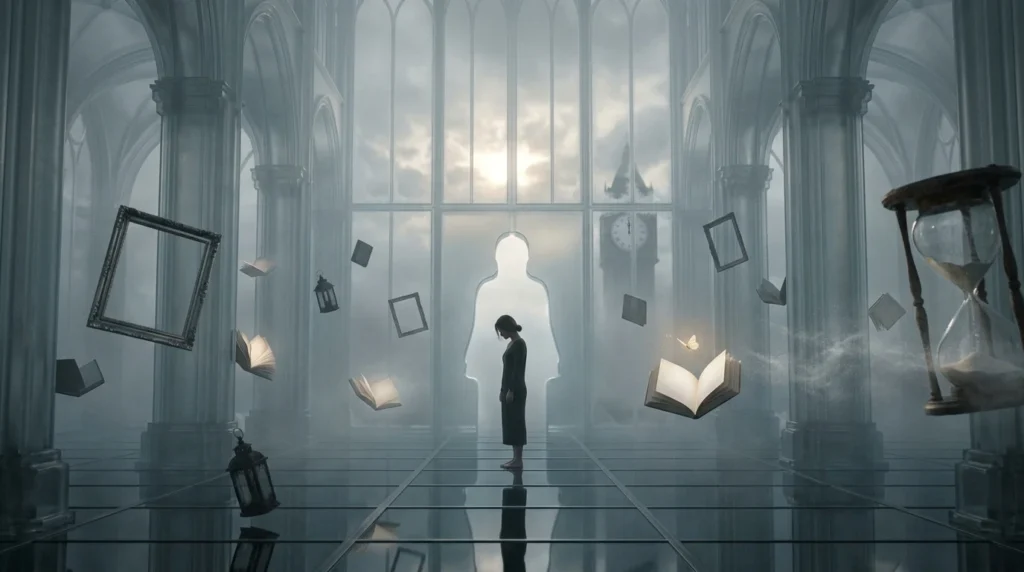
Have you ever tried to write about sadness, but the words just wouldn’t come? Many students and writers search for a metaphor for feeling empty when they want to describe that strange hollow feeling inside—like something important is missing, but they can’t fully explain it.
This feeling often shows up in writing, poetry, or even personal journaling. But here’s the tricky part: “empty” is a simple word, yet emotions are not simple at all. Beginners often feel stuck because literal language feels too flat.
That’s where metaphors help. They turn invisible emotions into pictures the reader can feel. Instead of saying “I feel empty,” you can say something that paints a scene inside the reader’s mind.
Let’s explore this in a warm, simple, and creative way so you can actually use it in your writing right away.
What Is a metaphor for feeling empty?
A metaphor for feeling empty is a figurative expression that compares emotional emptiness to something physical, visual, or symbolic without using “like” or “as.”
In simple words:
It is a way to say you feel hollow inside by showing an image instead of just stating it.
Writers use it because emotions are hard to explain directly. Metaphors help turn feelings into pictures the reader can understand instantly.
Think about it this way:
Instead of saying “I feel nothing inside,” you might say “I am a room with all the lights switched off.”
That tiny change creates a stronger image.
Why writers use it:
- To show emotional depth
- To make readers feel the emptiness
- To create poetic or dramatic writing
- To express silence, loss, or emotional numbness
Emotional impact:
It helps readers enter the feeling, not just read about it.
Quick List of metaphor for feeling empty Examples
Here are simple, emotional, and copy-ready metaphors you can use:
- A hollow shell — no inner life left
- An empty room with echoing silence — loneliness and stillness
- A drained ocean — all emotion gone
- A broken vase with nothing inside — loss of wholeness
- A sky without stars — beauty missing meaning
- A blank page that refuses to write — emotional block
- A burned-out candle — once bright, now gone
- A house with no furniture — life feels stripped away
- A dry well — no emotions left to give
- A forgotten suitcase — abandoned feelings
- A ghost town inside my chest — emotional emptiness
- A battery at 0% — completely drained energy
- A locked box with no key — emotions trapped and unreachable
- A silent song — something meant to feel but doesn’t
- A tree without leaves — life feels faded
- A paused movie with no story — emotional disconnect
- A cracked mirror — broken identity and emptiness
- A desert wind inside me — dry and lifeless feeling
- A book with missing pages — incomplete emotions
- A hollow drum — noise without meaning
Beautiful Metaphors for feeling empty
Some metaphors feel more poetic and emotional. These are often used in poetry or reflective writing:
- “I am a lantern with no flame.”
→ once guided light, now dark inside - “My heart is a room where the furniture has vanished.”
→ emotional absence and loss - “I am an abandoned house on a quiet street.”
→ forgotten and empty feeling - “Inside me is a sky that forgot how to rain.”
→ blocked emotions - “I am a song that lost its melody.”
→ emotional silence
These images work because they replace emotion with scenery. That’s what makes metaphors powerful in creative writing.
Poetic and Deep feeling empty Ideas
Here’s where writing becomes more artistic.
- A moon without reflection in water
- A riverbed waiting for rain that never comes
- A clock ticking in an empty station
- A feather floating without wind or purpose
- A candle melted into silence
These metaphors feel more symbolic. They often represent:
- emotional burnout
- loneliness
- grief
- numbness
- identity loss
Most writers use this style in poetry because it creates atmosphere, not just meaning.
feeling empty in Creative Writing
Writers use metaphors for emotional emptiness in many ways:
1. Storytelling
“After the goodbye, I was just a shell walking through days.”
2. Poetry
“I bloom in silence, a flower with no color left.”
3. School writing
Teachers love simple metaphors like:
“I felt like a broken toy left in the rain.”
4. Social media captions
- “Just running on empty.”
- “Silence feels louder today.”
- “A little lost inside myself.”
This is where emotional imagery becomes relatable and shareable.
Metaphor vs Simile
Here’s a simple comparison:
| Feature | Metaphor | Simile |
|---|---|---|
| Meaning | Direct comparison | Uses “like/as” |
| Structure | Strong, direct | Softer comparison |
| Example | I am a hollow shell | I feel like a hollow shell |
| Impact | More emotional | More descriptive |
| Beginner mistake | Overly complex images | Overusing “like/as” |
Why People Confuse Metaphors and Similes
This is very common for beginners.
- School teaches them together
- Both compare emotions
- Sentence structure feels similar
- Students often mix “is” and “like”
Simple rule:
- Metaphor = is something
- Simile = like/as something
That tiny difference changes the entire tone.
Real-Life Conversation Examples
School classroom:
Teacher: “How do you feel after the test?”
Student: “My brain is an empty room.”
🎯 Lesson: Emotions can be described visually.
Poetry writing:
Friend: “Write how sadness feels.”
Writer: “It’s a candle that forgot its flame.”
🎯 Lesson: Metaphors turn feelings into art.
Social media caption:
User: “Bad day?”
Reply: “Yeah… just a drained ocean today.”
🎯 Lesson: Short metaphors work in modern writing.
How to Create Your Own metaphor for feeling empty
Here’s the simple trick:
Step 1: Think of “empty” as a place
Room, sky, ocean, box, desert
Step 2: Add missing life
No light, no sound, no movement, no color
Step 3: Turn it into a sentence
“I am a ___ with no ___.”
Examples:
- I am a sky with no stars
- I am a room with no echo
- I am a book with missing pages
This is how writers build emotional imagery step by step.
Common Mistakes Beginners Make
- Using too many words → makes the metaphor weak
- Mixing literal and figurative meaning → confusing image
- Over-explaining → kills emotional impact
- Using cliché phrases too often → reduces originality
- Forgetting emotion → metaphor becomes just decoration
Fix: Keep it simple and visual.
Related Figurative Language Terms
- Simile → comparison using like/as
- Imagery → language that creates pictures
- Personification → giving human traits to objects
- Symbolism → using objects to represent ideas
- Hyperbole → exaggeration for effect
All of these work together with metaphors in creative writing.
Frequently Asked Questions
What is a simple metaphor for feeling empty?
“I am a hollow shell” or “I am an empty room” are simple examples.
Why do writers use metaphors for emptiness?
To show emotion visually instead of just saying “I feel empty.”
What is the strongest metaphor for emotional emptiness?
“I am a house with no furniture left inside.”
Can metaphors help in school writing?
Yes, they improve creativity and scoring in descriptive writing.
What is the difference between empty and numb in metaphors?
Empty suggests absence; numb suggests lack of feeling.
Can I use metaphors in social media captions?
Yes, short ones like “running on empty” work very well.
Are metaphors used in poetry?
Yes, they are one of the main tools in poetry.
Conclusion
A metaphor for feeling empty helps turn a quiet, invisible emotion into something you can actually see in your mind. Instead of struggling with plain words, you can use images like empty rooms, silent skies, or hollow shells to express what’s inside.
The more you practice, the more natural it becomes. You’ll start noticing that emotions don’t just live in feelings—they live in pictures, symbols, and small poetic moments.
And once you learn to see emotions this way, writing stops feeling empty too.