
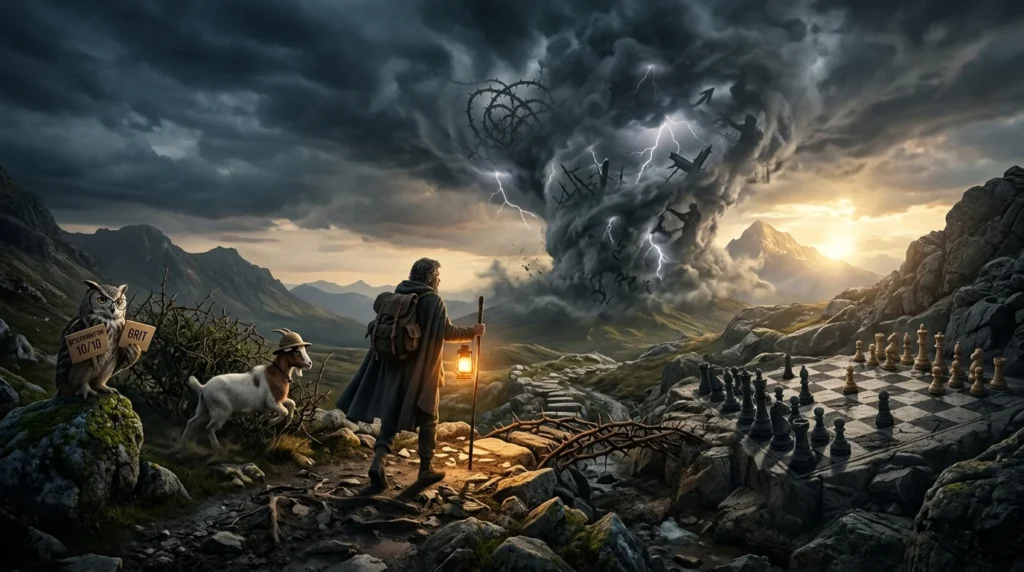
Have you ever sat down to write a story, poem, essay, or social media caption and struggled to describe an enemy without using the word enemy over and over again?
Many writers run into this problem. They want stronger imagery, deeper emotion, and more memorable language. That’s why people often search for a metaphor for enemy. A good metaphor can transform a simple opponent into a storm, a shadow, a poison vine, or even a wolf at the door.
Metaphors help readers feel conflict instead of merely reading about it. They create emotional imagery, symbolism, and vivid scenes that stay in the reader’s mind long after the words are gone.
Whether you’re working on a school assignment, writing poetry, creating fiction, or simply exploring figurative language, understanding enemy metaphors can make your writing more powerful and expressive.
Let’s explore some of the most creative and meaningful metaphor ideas.
What Is a Metaphor for Enemy?
A metaphor for enemy is a figure of speech that describes an enemy as something else to highlight their qualities, actions, or emotional impact.
In figurative language, a metaphor does not use “like” or “as.” Instead, it directly compares one thing to another.
For example:
- He was the storm that shattered every peaceful day.
- Her enemy was a snake hidden in the grass.
Writers use enemy metaphors because they:
- Create stronger imagery
- Add symbolism
- Build emotional tension
- Make characters more memorable
- Improve descriptive writing
Think about it this way: calling someone an enemy gives information. Calling them a storm creates a picture.
That tiny change creates a stronger image.
Quick List of Metaphor for Enemy Examples
Here are some easy copy-and-paste examples.
- A storm — brings destruction and chaos
- A snake — represents betrayal
- A wolf — symbolizes danger
- A shadow — constantly follows and threatens
- A thorn — causes ongoing pain
- A wildfire — spreads harm quickly
- A poison vine — slowly damages everything
- A ticking bomb — waiting to cause trouble
- A dark cloud — brings fear and negativity
- A predator — constantly hunts
- An iceberg — hides dangerous intentions
- A parasite — drains strength and energy
- A tornado — creates sudden destruction
- A disease — spreads suffering
- A crack in the foundation — weakens stability
- A vulture — waits for weakness
- A prison — limits freedom
- A dagger — causes sharp emotional wounds
- A battlefield — creates constant conflict
- A raging fire — consumes peace
- A trap — catches the unsuspecting
- A stormy sea — makes progress difficult
- A ghost — impossible to escape
- A wall — blocks success
- A dragon — powerful and intimidating
Beautiful Metaphors for Enemy
Some metaphors focus less on danger and more on emotional depth.
The Shadow
My enemy was a shadow that followed every step.
This metaphor suggests an opponent who is always present, even when unseen.
The Thorn
He became the thorn buried beneath every victory.
A thorn symbolizes persistent irritation and pain.
The Winter Wind
Her enemy was the winter wind that froze every hopeful dream.
This creates cold, emotional imagery.
The Dark Tide
The enemy arrived as a dark tide, swallowing everything in its path.
This image suggests overwhelming force.
The Poisoned Root
Their enemy was the poisoned root beneath a healthy tree.
This metaphor highlights hidden damage.
Poetic and Deep Enemy Ideas
Poets often use symbolism and layered imagery.
The Eclipse
The enemy was an eclipse stealing the warmth of the sun.
Meaning:
Loss of joy, hope, or clarity.
The Rust
Hatred became rust eating away at the soul.
Meaning:
Slow emotional destruction.
The Silent Wolf
His enemy was a silent wolf waiting beyond the trees.
Meaning:
Hidden danger and patience.
The Broken Compass
Fear became a broken compass leading him astray.
Meaning:
An enemy that causes confusion.
The Black River
The enemy was a black river carrying away peace.
Meaning:
Loss and emotional turmoil.
These poetic expressions often appear in creative writing, symbolism, and literary devices because they encourage readers to imagine rather than simply observe.
Metaphor for Enemy in Creative Writing
Most writers use this because conflict drives stories.
An enemy metaphor can instantly reveal personality, emotion, and tension.
Story Example
The new principal was a steel wall standing between the students and freedom.
The metaphor helps readers understand the relationship immediately.
Poetry Example
You were the storm cloud hanging over my brightest days.
The image creates emotional weight.
Essay Example
Poverty can be a cage that limits opportunity.
Here, the enemy is not a person but a challenge.
Fantasy Example
The king’s enemy was a dragon sleeping beneath the kingdom.
Fantasy writing often uses mythical symbolism.
Descriptive Writing Example
Jealousy became a snake curling around her heart.
This combines emotional imagery with personification-like qualities.
Metaphor vs Simile
| Feature | Metaphor | Simile |
|---|---|---|
| Meaning | Direct comparison | Comparison using “like” or “as” |
| Grammar | Says one thing is another | Says one thing is like another |
| Emotional Impact | Stronger and more direct | Softer and more explanatory |
| Example | The enemy was a wolf. | The enemy was like a wolf. |
| Imagery | Immediate | Gradual |
| Common Mistake | Taking it literally | Overusing “like” |
Why People Confuse Metaphors and Similes
This is where many beginners get confused.
Both compare things.
The difference is simple.
Metaphor
The enemy was a snake.
Simile
The enemy was like a snake.
Many students learn both forms at the same time and focus only on the comparison itself.
The easiest trick is to check for the words like or as.
If they appear, it’s usually a simile.
If they don’t, it’s often a metaphor.
Real-Life Conversation Examples
School Assignment
Student: “I need a better word for enemy.”
Teacher: “Try a metaphor.”
Student: “Like what?”
Teacher: “Maybe your enemy is a storm that keeps returning.”
🎯 Lesson: Metaphors create stronger imagery.
Poetry Writing
Writer: “I don’t want to say enemy.”
Friend: “Call them a shadow.”
Writer: “That sounds much deeper.”
🎯 Lesson: Symbolism adds emotion.
Storytelling
Author: “The villain feels boring.”
Editor: “Make him a wildfire.”
Author: “Now he feels dangerous.”
🎯 Lesson: Metaphors strengthen characterization.
Social Media Caption
Friend: “How do I describe negativity?”
Friend 2: “Say it’s a dark cloud.”
🎯 Lesson: Metaphors make short writing memorable.
Classroom Discussion
Student: “Can fear be an enemy?”
Teacher: “Absolutely. Fear can be a prison.”
🎯 Lesson: Enemies can be emotions too.
How to Create Your Own Metaphor for Enemy
Creating metaphors is easier than most people think.
Think About the Feeling
Ask yourself:
- Dangerous?
- Annoying?
- Betraying?
- Overwhelming?
Look for a Symbol
Match the feeling with an image.
Examples:
- Betrayal → Snake
- Chaos → Storm
- Persistence → Thorn
- Fear → Shadow
Use Nature
Nature symbolism creates vivid imagery.
Examples:
- Wildfire
- Tornado
- Iceberg
- Ocean wave
Use Objects
Objects often carry symbolic meaning.
Examples:
- Cage
- Wall
- Dagger
- Chain
Keep It Simple
The strongest metaphors are usually easy to picture.
Common Mistakes Beginners Make
Using Clichés Too Often
Mistake:
The enemy was a monster.
Why it happens:
The image is familiar.
Better:
The enemy was rust eating away at trust.
Mixing Metaphors
Mistake:
The enemy was a storm that slithered like a snake through the ocean of fire.
Why it happens:
Too many images compete.
Better:
The enemy was a storm tearing through their lives.
Overexplaining
Mistake:
The enemy was a snake because snakes are dangerous and sneaky.
Better:
The enemy was a snake in the grass.
Forgetting Context
Mistake:
Using random symbols that don’t fit the story.
Better:
Choose imagery connected to the character’s emotions.
Related Figurative Language Terms
Simile
Compares things using like or as.
Example:
The enemy moved like a wolf.
Imagery
Language that creates pictures in the reader’s mind.
Example:
Dark clouds gathered over the battlefield.
Personification
Gives human qualities to non-human things.
Example:
Fear whispered in his ear.
Symbolism
Uses objects or images to represent deeper meanings.
Example:
A snake symbolizes betrayal.
Hyperbole
An intentional exaggeration.
Example:
My enemy caused a million problems.
Symbolism of Enemies in Literature
Throughout literature, enemies often represent more than people.
They may symbolize:
- Fear
- Pride
- Temptation
- Doubt
- Jealousy
- Social injustice
- Inner conflict
Many famous stories reveal that the greatest enemy is not an outside villain but something within the character.
That deeper symbolism is one reason metaphor remains one of the most powerful writing techniques in literature.
Frequently Asked Questions
What is a good metaphor for enemy?
A storm, snake, shadow, thorn, wildfire, or wolf are all strong enemy metaphors.
What metaphor represents a dangerous enemy?
A predator, dragon, wildfire, or tornado can represent a dangerous enemy.
Can an emotion be an enemy?
Yes. Fear, jealousy, guilt, and anger are often described as enemies in figurative language.
What is a poetic metaphor for enemy?
“The enemy was an eclipse blocking the sun” is a poetic example.
What is the difference between a metaphor and a simile?
A metaphor says something is another thing. A simile compares using “like” or “as.”
Why do writers use enemy metaphors?
They create imagery, symbolism, emotional depth, and stronger storytelling.
Can metaphors be used in school essays?
Yes. They make writing more vivid and engaging when used appropriately.
What is the easiest enemy metaphor for beginners?
“The enemy was a storm” is simple, clear, and easy to understand.
Conclusion
Learning how to use a metaphor for enemy can instantly make your writing more vivid, emotional, and memorable. Instead of simply naming an opponent, you create imagery that readers can see and feel. A shadow, storm, thorn, wildfire, or snake each tells a different story and carries its own symbolism.
As you practice creative writing, pay attention to the emotions behind the conflict. Then match those emotions with images from nature, everyday life, or your imagination. That’s where the strongest metaphors are born.
The more you experiment with figurative language, imagery, symbolism, and poetic expression, the easier it becomes to create powerful descriptions that stay with readers long after the final sentence.