
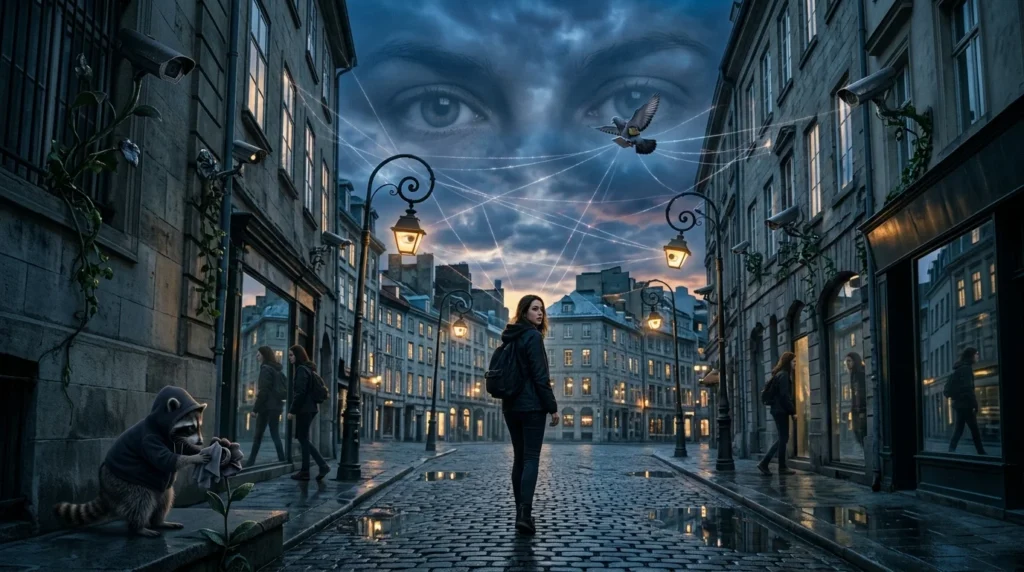
Have you ever felt like someone’s eyes are on you, even when no one is there? Maybe you were alone in a quiet room, but still felt uneasy, like the air itself was observing you. That feeling is exactly why people search for a metaphor for being watched—because language often tries to capture that invisible pressure we feel in real life.
Writers use this idea when they want to show tension, paranoia, guilt, or even a quiet sense of awareness. It appears in stories, poetry, school assignments, and even social media captions. But many beginners get stuck because they can’t turn that feeling into words.
Think about it this way: being watched is not always about real eyes. Sometimes it is imagination. Sometimes it is fear. Sometimes it is memory. And that is where metaphors become powerful—they turn invisible feelings into something you can picture.
Let’s explore it in a simple, creative, and human way.
What Is a Metaphor for Being Watched?
A metaphor for being watched is a figurative expression that describes the feeling of being observed without saying it directly.
In simple words:
It is when writers compare the feeling of being watched to something else—like shadows, cameras, ghosts, or eyes in the dark.
Writers use it to show:
- anxiety or paranoia
- guilt or fear
- pressure or judgment
- supernatural or mysterious moods
Instead of saying “I felt watched,” a writer might say, “The walls had eyes.”
That tiny change creates a stronger image.
This is where figurative language, imagery, and symbolism work together to build emotional depth.
Quick List of Metaphor for Being Watched Examples
Here are simple, copy-ready metaphors you can use in writing:
- The room had eyes everywhere — feeling of constant observation
- Shadows leaned closer to listen — unseen presence
- The night blinked at me — mysterious awareness
- The air was a silent audience — feeling judged
- Walls whispered my name — paranoia or fear
- The city never slept its gaze — urban surveillance feeling
- Every corner carried a stare — anxiety in space
- Darkness wore a thousand eyes — fear of unknown
- The mirror refused to forget me — self-consciousness
- Time itself watched me freeze — pressure and tension
- The silence was watching too — emotional unease
- Invisible cameras followed my breath — modern surveillance feeling
- The ceiling pressed its attention down — claustrophobic fear
- Even the dust seemed curious — hyper-awareness
- My thoughts had witnesses — inner guilt
These are great for stories, poetry, or creative writing homework.
Beautiful Metaphors for Being Watched
Here are more emotional and poetic versions:
- The stars were silent judges in the sky
- The moon held its breath while I moved
- Every heartbeat echoed like footsteps in a hall of eyes
- The world narrowed into a single stare
- My shadow no longer trusted me
- The night wrapped itself around my secrets
- Even the wind paused to notice me
Each of these builds emotional imagery. They don’t just say “watched”—they make you feel it.
Poetic and Deep Metaphors for Being Watched
Now let’s go deeper into symbolic writing:
- The universe leaned in to listen to my silence
- I walked through a cathedral of invisible eyes
- My soul stood under an endless spotlight
- Reality itself paused to observe my mistake
- The dark stitched eyes into every corner
These feel more literary. You’ll often see them in poetry and psychological fiction.
Writers use this style when they want to create:
- suspense
- emotional weight
- symbolic meaning
This is where poetic language becomes powerful.
Metaphor for Being Watched in Creative Writing
Writers use this idea in many ways:
In stories, it builds tension:
“He walked through the hallway where the walls seemed to follow him.”
In poetry, it creates emotion:
“I bloom under unseen eyes that never blink.”
In descriptive writing, it builds atmosphere:
“The room felt crowded, though no one stood inside it.”
In school assignments, it helps improve imagery and vocabulary.
Here’s a simple student example:
“It felt like the classroom was watching me breathe.”
That is simple, but very effective.
Metaphor vs Simile
| Feature | Metaphor | Simile |
|---|---|---|
| Meaning | Direct comparison | Uses “like” or “as” |
| Example | “The room had eyes” | “The room felt like it had eyes” |
| Emotional impact | Strong, immersive | Softer, clearer |
| Style | Literary, bold | Beginner-friendly |
| Common mistake | Too abstract | Overusing “like/as” |
Both are part of figurative language, but metaphors feel more intense.
Why People Confuse Metaphors and Similes
This confusion is very common.
Here’s why:
- School teaches both together
- Both compare ideas
- Sentence structure looks similar
- Beginners rely on “like” too much
A simple trick:
If it says “is” or “was,” it’s likely a metaphor.
If it says “like” or “as,” it’s a simile.
That small difference changes the whole emotional tone.
Real-Life Conversation Examples
1. Classroom discussion
Student: “I felt like the teacher was watching me all day.”
Teacher: “Try a metaphor.”
Student: “The teacher’s eyes followed every breath I took.”
🎯 Lesson: Metaphors make feelings stronger.
2. Poetry writing practice
Friend: “How do I show anxiety?”
Writer: “Say the air is watching you.”
🎯 Lesson: Environment can reflect emotion.
3. Social media caption
Post: “The city never blinks at night.”
🎯 Lesson: Urban metaphors create mood.
4. Storytelling moment
Character: “I felt unseen but observed.”
Writer version: “The shadows kept me company like silent watchers.”
🎯 Lesson: Atmosphere matters more than action.
How to Create Your Own Metaphor for Being Watched
Here’s a simple method:
First, imagine the feeling. Is it scary, calm, or strange?
Then choose a watcher:
- eyes
- shadows
- sky
- objects
- silence
Now transform it:
- “I feel watched” → “Silence has eyes”
- “Someone is observing me” → “The room breathes attention”
That’s the creative trick.
Most writers use this because it turns emotion into imagery.
Common Mistakes Beginners Make
- Using too many words instead of one strong image
- Writing “I feel watched” repeatedly instead of transforming it
- Making metaphors too logical instead of emotional
- Mixing simile and metaphor incorrectly
- Overexplaining the meaning
Correct version is always simpler and more visual.
Related Figurative Language Terms
- Simile → comparison using like/as (“like eyes in the dark”)
- Imagery → language that creates pictures in the mind
- Personification → giving human traits to objects (“the walls stared”)
- Symbolism → objects representing ideas (eyes = judgment)
- Hyperbole → exaggeration for effect (“a thousand eyes on me”)
All of these connect naturally to the idea of being watched.
Frequently Asked Questions
What is a metaphor for being watched?
It is a figurative expression that describes the feeling of observation without saying it directly.
Why do writers use metaphors for being watched?
To create tension, emotion, and atmosphere in stories or poetry.
What is a simple example?
“The walls had eyes everywhere.”
Is it the same as paranoia?
Not exactly. Paranoia is a feeling; metaphors describe that feeling creatively.
Can I use it in school essays?
Yes, it improves descriptive writing and scores better in creative tasks.
What emotion does it show?
Usually fear, anxiety, guilt, or awareness.
What is a poetic example?
“The night never blinked while I moved through it.”
Conclusion
A metaphor for being watched is more than just a writing trick—it is a way to give shape to invisible feelings. It turns silence into presence, darkness into awareness, and emotion into imagery.
When you start using metaphors like these, your writing becomes more than sentences. It becomes atmosphere. It becomes feeling. It becomes something readers can see without being told.
So next time you feel like eyes are on you, don’t just say it—paint it in language.