
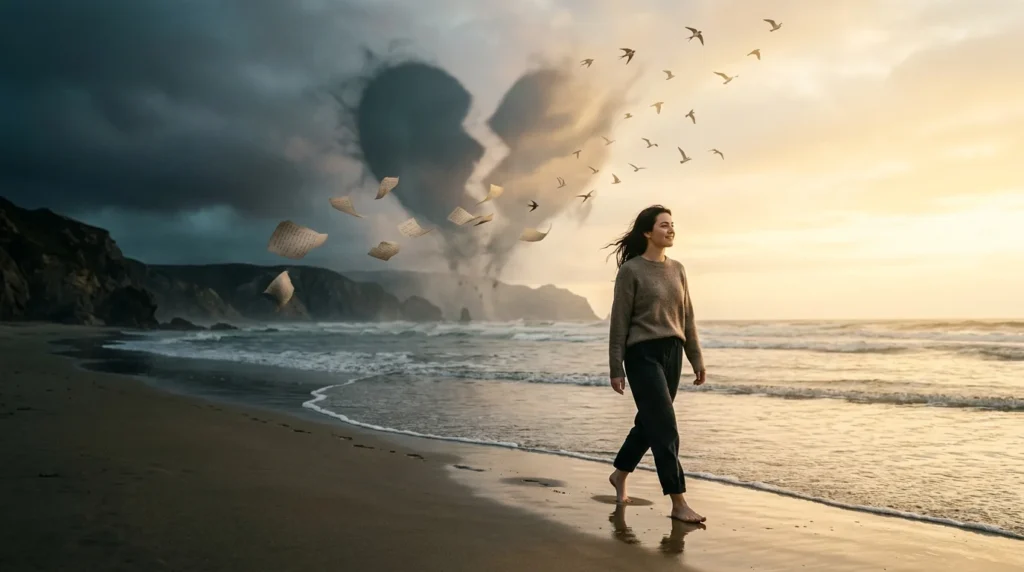
Have you ever tried to describe a moment when your heart seemed to pound so hard that it felt alive on its own?
Maybe you were about to give a speech, meet someone special, step onto a stage, or hear life-changing news. In moments like these, writers often search for a metaphor for heart racing because simple descriptions sometimes fail to capture the intensity of the feeling.
Saying “my heart was beating fast” tells the reader what happened. A metaphor helps them feel it.
That’s why metaphors are so powerful in creative writing, poetry, and descriptive writing. They turn emotions into images, allowing readers to see, hear, and experience nervousness, excitement, fear, love, or anticipation.
If you’ve ever struggled to find the perfect words for a racing heart, you’re in the right place. Below, you’ll discover vivid examples, poetic inspiration, practical writing tips, and beginner-friendly explanations that can instantly strengthen your writing.
Let’s start with the basics.
What Is a Metaphor for Heart Racing?
A metaphor for heart racing is a figurative language device that compares a fast-beating heart to something else without using “like” or “as.”
Think about it this way: instead of saying your heart beat quickly, you might say:
“A wild drum thundered inside my chest.”
The heart isn’t actually a drum. The comparison creates strong imagery and emotional impact.
Writers use heart-racing metaphors to:
- Show fear
- Express excitement
- Reveal attraction
- Build suspense
- Create emotional imagery
- Strengthen storytelling
Real-World Example
Instead of:
“My heart raced before the interview.”
Try:
“A trapped bird battered its wings against my ribs.”
That tiny change creates a stronger image.
Quick List of Metaphor for Heart Racing Examples
Here are some easy copy-and-paste examples.
- A drumline exploded inside my chest — intense excitement
- A trapped bird fluttered behind my ribs — nervousness
- A runaway train thundered through me — overwhelming emotion
- A storm pounded beneath my skin — fear
- Fireworks burst inside my chest — joy
- A galloping horse charged through my body — adrenaline
- A hummingbird buzzed in my ribcage — anticipation
- A war drum echoed through my veins — tension
- A lightning bolt crackled in my chest — sudden shock
- A volcano rumbled beneath my heart — rising emotion
- A rocket launched inside me — excitement
- A caged animal fought for freedom — panic
- Thunder rolled through my chest — anxiety
- A race car revved beneath my ribs — eagerness
- Ocean waves crashed inside me — emotional overwhelm
- A flock of wings erupted in my chest — surprise
- A beating drum summoned the night — suspense
- A wildfire spread through my body — passion
- A river rushed through my veins — anticipation
- A ticking bomb counted down inside me — fear
- A stampede shook my chest — panic
- A restless engine roared to life — excitement
- A tornado spun inside my ribs — confusion
- A bell rang wildly within me — nervous joy
- A thousand footsteps echoed in my chest — dread
- A thundercloud lived behind my ribs — anxiety
- A comet streaked through my body — exhilaration
- A furnace blazed inside me — passion
- A drum solo rattled my bones — excitement
- A hurricane spun through my chest — intense emotion
Beautiful Metaphors for Heart Racing
Some metaphors feel especially vivid and emotional.
A Bird Desperate for the Sky
This metaphor captures nervous excitement.
Example:
“A small bird battered against my ribs, searching for an open sky.”
Fireworks Beneath the Skin
Perfect for happiness or romance.
Example:
“Fireworks blossomed beneath my skin the moment she smiled.”
A Wild Horse Breaking Free
Great for adrenaline-filled scenes.
Example:
“A wild horse kicked and charged inside my chest.”
Thunder in a Quiet Valley
Excellent for suspense.
Example:
“Thunder rolled through my chest while the room stayed silent.”
A River After Heavy Rain
Ideal for overwhelming emotion.
Example:
“A swollen river rushed through my chest and carried away my calm.”
Poetic and Deep Heart Racing Ideas
Poetry often uses symbolism and layered imagery.
The Drum of Destiny
Symbolizes life-changing moments.
“The drum of destiny echoed beneath my ribs.”
A Star Trying to Escape
Represents hope and longing.
“A restless star knocked against my chest, searching for the night.”
A Storm Looking for Land
Represents emotional turbulence.
“A storm wandered through my chest, searching for somewhere to break.”
The Wings of Tomorrow
Represents anticipation.
“Tomorrow’s wings fluttered wildly inside me.”
A Volcano of Silence
Represents hidden feelings.
“A volcano slept beneath my smile and trembled beneath my ribs.”
A Lighthouse in Rough Water
Represents hope during anxiety.
“A lonely lighthouse flashed inside my racing chest.”
Heart Racing in Creative Writing
Writers use heart-racing metaphors to make emotions visible.
In Storytelling
Instead of telling readers someone is nervous, show them.
Example:
“A trapped bird battered itself against his ribs as he stepped onto the stage.”
In Poetry
Metaphors create beauty and rhythm.
Example:
“Thunder wore my heartbeat as a disguise.”
In Descriptive Writing
Strong imagery improves scenes.
Example:
“A racehorse sprinted through her chest as the phone rang.”
In School Assignments
Teachers often encourage figurative language.
Example:
“My heart became a drumline before I delivered my presentation.”
In Social Media Captions
Short metaphors stand out.
Example:
“Fireworks in my chest. Chaos in my smile.”
Metaphor vs Simile
| Feature | Metaphor | Simile |
|---|---|---|
| Meaning | Direct comparison | Comparison using like or as |
| Grammar | Says something is something else | Says something is like something else |
| Emotional Impact | Stronger and more immediate | Softer and more explicit |
| Example | My heart was a drum | My heart beat like a drum |
| Writing Style | More poetic | More conversational |
| Beginner Mistake | Taking comparison literally | Overusing like or as |
Quick Trick
If the sentence uses like or as, it’s usually a simile.
Why People Confuse Metaphors and Similes
This is where many beginners get confused.
Both metaphors and similes compare things.
For example:
Metaphor:
“My heart was a trapped bird.”
Simile:
“My heart was like a trapped bird.”
The meaning is similar.
The difference is the grammar.
A metaphor creates a stronger image because it treats the comparison as if it were real.
Many students learn both forms at the same time, which makes them easy to mix up.
Real-Life Conversation Examples
School Presentation
Student: “I thought I would forget everything.”
Friend: “Were you nervous?”
Student: “A drumline was pounding in my chest.”
🎯 Lesson: Metaphors make feelings easier to imagine.
Poetry Class
Teacher: “How did your character feel?”
Student: “A trapped bird fluttered behind her ribs.”
🎯 Lesson: Show emotion through imagery.
First Date
Friend: “How did it go?”
You: “Fireworks exploded inside my chest when she arrived.”
🎯 Lesson: Metaphors create emotional imagery.
Storytelling
Reader: “Was the character scared?”
Writer: “A storm rolled through his chest before he opened the door.”
🎯 Lesson: Let images reveal emotions.
Social Media Caption
Friend: “Love the photo.”
Caption: “A thousand wings beating inside my chest.”
🎯 Lesson: Short metaphors can be powerful.
How to Create Your Own Metaphor for Heart Racing
Creating metaphors becomes easier with practice.
Think About Movement
Ask yourself:
What moves quickly?
Examples:
- Birds
- Horses
- Rivers
- Storms
- Trains
Connect Emotion
Different emotions create different images.
| Emotion | Image |
|---|---|
| Fear | Storm |
| Love | Fireworks |
| Excitement | Rocket |
| Anxiety | Trapped bird |
| Anticipation | Racehorse |
Use Symbolism
Many writers connect emotions to symbols.
Examples:
- Wings = freedom
- Fire = passion
- Water = emotion
- Thunder = power
- Stars = hope
Visualize the Feeling
Close your eyes and imagine the sensation.
What does it resemble?
The answer often becomes your metaphor.
Common Mistakes Beginners Make
Using Clichés Too Often
Mistake:
“My heart raced.”
Better:
“A runaway train thundered through my chest.”
Why it happens:
People use familiar phrases without adding imagery.
Mixing Too Many Images
Mistake:
“My heart was a bird, a volcano, and a rocket.”
Better:
Choose one image.
Why it happens:
Writers get excited and combine unrelated metaphors.
Making the Comparison Unclear
Mistake:
“My heart was furniture.”
Better:
“My heart was a war drum.”
Why it happens:
The image doesn’t connect to the feeling.
Forgetting Emotion
Mistake:
Using random objects.
Better:
Choose symbols that match the mood.
Why it happens:
Writers focus on creativity instead of meaning.
Related Figurative Language Terms
Simile
A comparison using like or as.
Example:
“My heart beat like a drum.”
Imagery
Language that helps readers see, hear, or feel something.
Example:
“Thunder rolled beneath my ribs.”
Personification
Giving human qualities to non-human things.
Example:
“My heartbeat screamed for attention.”
Symbolism
Using an object or image to represent a deeper meaning.
Example:
A bird symbolizing freedom or nervous energy.
Hyperbole
An intentional exaggeration.
Example:
“My heart nearly exploded from excitement.”
Symbolism of the Racing Heart in Literature
Throughout literature, a racing heart often symbolizes more than physical excitement.
It can represent:
- Fear of the unknown
- Romantic attraction
- Courage before action
- Inner conflict
- Anticipation
- Personal transformation
Many poets and novelists use heart imagery because readers instantly recognize the feeling.
A racing heart becomes a symbol of being fully alive in a moment that matters.
Frequently Asked Questions
What is a metaphor for heart racing?
A metaphor for heart racing compares a fast heartbeat to something else, such as a drum, bird, storm, or horse.
What is the best metaphor for a racing heart?
One popular example is:
“A trapped bird fluttered behind my ribs.”
Is “my heart was a drum” a metaphor?
Yes. It directly compares the heart to a drum without using “like” or “as.”
What emotions can heart-racing metaphors show?
They can show fear, excitement, anxiety, love, anticipation, joy, or suspense.
Can I use heart-racing metaphors in essays?
Yes. They improve descriptive writing and make emotions more vivid.
What’s the difference between a heart metaphor and a simile?
A metaphor says the heart is something else. A simile says the heart is like something else.
Why do poets use heart-racing metaphors?
They create stronger imagery and help readers feel emotions more deeply.
Are heart-racing metaphors good for stories?
Absolutely. They reveal emotions without directly stating them.
Conclusion
Finding the perfect metaphor for heart racing can transform an ordinary sentence into something memorable and alive. Instead of simply telling readers that someone feels nervous, excited, frightened, or in love, a strong metaphor lets them experience that emotion through imagery and symbolism.
Whether you choose a trapped bird, a thunderstorm, a wild horse, or fireworks beneath the skin, the goal is the same: make the feeling visible. The best metaphors connect emotion with imagination, creating scenes that stay with readers long after they finish the page.
Keep experimenting, trust your creativity, and don’t worry about making every metaphor perfect. The more you practice, the easier it becomes to turn powerful emotions into powerful language. Sometimes all it takes is one vivid image to make a heartbeat unforgettable.