
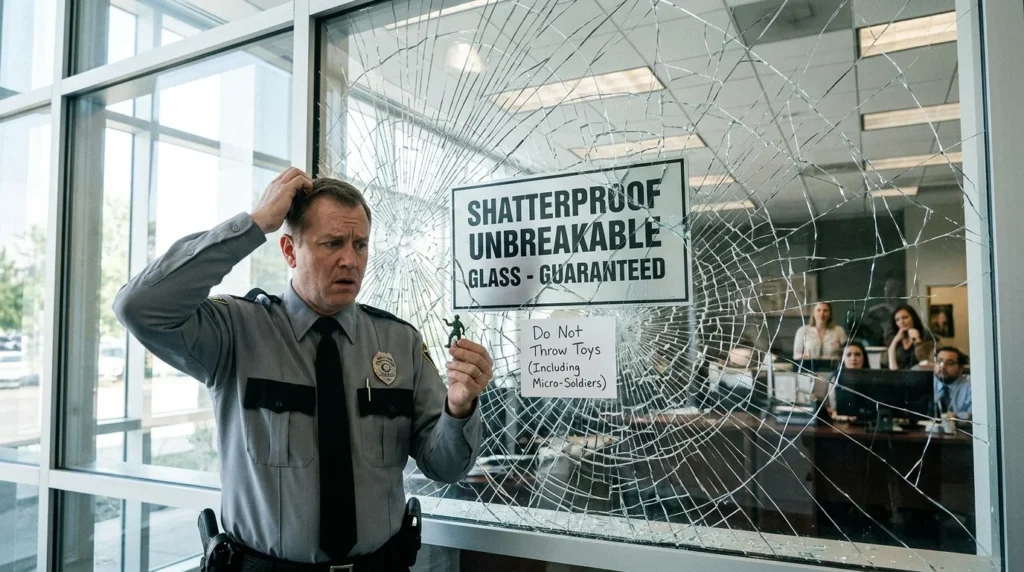
Have you ever looked at a shattered window and felt something deeper than just damage? Maybe it reminded you of a friendship that slowly fell apart, or a moment in life that couldn’t be fixed the same way again. That’s exactly where the metaphor for broken glass comes in.
People often search for “metaphor for broken glass” when they’re trying to turn strong emotions into words. It feels confusing at first. Is it just about glass? Or does it mean something bigger in writing?
Here’s the truth: writers use broken glass to describe pain, change, loss, or emotional damage in a way that feels sharp and real. It’s not just an object—it becomes a picture of feelings.
Think about it this way… one small crack can change everything. That tiny image can hold heartbreak, anger, memory, or even growth.
Let’s explore how this simple object becomes powerful language in poetry, stories, and creative writing.
What Is a metaphor for broken glass?
A metaphor for broken glass is a literary expression where shattered glass represents emotional pain, broken trust, loss, or life-changing experiences.
In simple words:
It means something fragile in life has been damaged, just like glass that cannot return to its original shape.
Writers use this metaphor because it is easy to visualize. Everyone knows what broken glass looks like—sharp, scattered, and permanent.
Why writers use it:
- It shows emotional pain clearly
- It creates strong visual imagery
- It represents irreversible change
- It adds depth to storytelling and poetry
Emotional meaning:
Broken glass often symbolizes:
- heartbreak 💔
- betrayal
- lost innocence
- emotional damage
- sudden life changes
Think about it this way… glass doesn’t just break quietly. It shatters. That sound and image make the feeling stronger for readers.
Quick List of Metaphor for Broken Glass Examples
Here are simple, copy-ready metaphors using broken glass imagery:
- “My heart was broken glass on the floor.” — emotional heartbreak
- “Trust between us became shattered glass.” — broken trust
- “Her dreams lay like broken glass in the dark.” — lost hopes
- “His words fell like glass breaking inside me.” — emotional pain
- “Our friendship turned into scattered shards.” — separation
- “She smiled, but it was cracked glass.” — hidden sadness
- “The memory felt like stepping on glass.” — painful memory
- “My past is broken glass I cannot pick up.” — irreversible history
- “Love became shattered windows in my mind.” — failed relationship
- “His anger was glass breaking in silence.” — silent rage
- “Hope looked like fragile glass under pressure.” — delicate hope
- “Her voice sounded like cracked glass.” — emotional strain
- “The family bond lay in shards on the floor.” — broken family ties
- “Dreams don’t always survive the fall—they become glass.” — failed goals
- “My confidence broke like glass hitting stone.” — loss of self-esteem
- “That moment turned everything into sharp fragments.” — life change
- “His apology was glass trying to heal itself.” — regret
- “Their love story ended in broken reflections.” — failed romance
- “The truth shattered like glass in sunlight.” — harsh reality
- “My childhood feels like broken glass in memory.” — nostalgic pain
Beautiful Metaphors for Broken Glass
Here are deeper and more emotional versions:
- “Broken glass under moonlight looks like forgotten memories.”
- “Her heart was a window no longer whole.”
- “Each shard held a piece of what we lost.”
- “Time stepped over broken glass and never returned the same.”
- “His silence was a room filled with shattered light.”
These examples feel poetic because they mix imagery + emotion + symbolism.
Poetic and Deep Broken Glass Ideas
Writers often use broken glass in symbolic ways:
- Glass as emotional vulnerability
- Shards as memories that hurt to remember
- Reflection in glass as identity loss
- Broken windows as lost protection
- Sharp edges as emotional trauma
Think about it this way… glass doesn’t just break outward. It reflects light differently afterward. That’s why it fits emotional storytelling so well.
Metaphor for Broken Glass in Creative Writing
Writers use this metaphor in:
Stories
“To show a character who has gone through emotional trauma.”
Poetry
“To express heartbreak, loss, or transformation.”
Descriptive writing
“To create vivid emotional imagery.”
School assignments
“To explain abstract feelings in simple visual form.”
Mini writing example:
“She stood in the empty room, where everything felt like broken glass—silent, sharp, and impossible to fix.”
That one sentence creates a full emotional scene.
Metaphor vs Simile
| Feature | Metaphor | Simile |
|---|---|---|
| Meaning | Direct comparison | Uses “like” or “as” |
| Grammar | “My heart is broken glass” | “My heart is like broken glass” |
| Emotional impact | Stronger, deeper | Softer, clearer |
| Example | “Life is shattered glass.” | “Life is like shattered glass.” |
| Beginner mistake | Mixing literal meaning | Overusing “like/as” |
Why People Confuse Metaphors and Similes
This is where many beginners get confused.
- Both compare things
- Both use imagery
- School lessons often mix them
- Students forget grammar structure
Here’s the simple trick:
If you see “like” or “as”, it’s a simile.
If not, it’s a metaphor.
Real-Life Conversation Examples
1. Classroom Discussion
Student: “Is broken glass a metaphor for sadness?”
Teacher: “Yes, it shows how emotions can shatter inside us.”
🎯 Lesson: Metaphors turn objects into emotions.
2. Poetry Writing Help
Student: “I want my poem to feel emotional.”
Friend: “Try broken glass—it shows pain visually.”
🎯 Lesson: Imagery makes poetry powerful.
3. Social Media Caption
Post: “Feeling like broken glass today.”
Comment: “That hits deep.”
🎯 Lesson: Simple metaphors create strong emotional reactions.
4. Storytelling Moment
Writer: “How do I show heartbreak?”
Editor: “Use broken glass—it instantly paints the feeling.”
🎯 Lesson: Symbolism improves storytelling.
How to Create Your Own Metaphor for Broken Glass
Here’s the simple trick:
- Think of an emotion (sadness, anger, love)
- Picture broken glass in your mind
- Match emotion with visual image
- Ask: “What does it feel like physically?”
Examples:
- sadness → cold shards
- anger → exploding glass
- heartbreak → scattered pieces
- confusion → foggy broken reflection
That’s how writers create powerful metaphors.
Common Mistakes Beginners Make
- Using too many metaphors in one sentence → makes writing confusing
- Making literal comparisons → weak emotional impact
- Over-explaining the metaphor → reduces power
- Mixing simile and metaphor incorrectly → grammar issues
- Using cliché phrases → reduces originality
Related Figurative Language Terms
- Simile → comparison using like/as
- Imagery → language that paints pictures
- Personification → giving human traits to objects
- Symbolism → using objects to represent ideas
- Hyperbole → exaggeration for effect
These tools work together to make writing more emotional and visual.
Frequently Asked Questions
What does broken glass symbolize in writing?
It symbolizes emotional pain, broken trust, loss, or life changes.
Is broken glass a metaphor or simile?
It is a metaphor when used directly, and a simile when using “like” or “as.”
Why do writers use broken glass imagery?
Because it creates strong visual emotion and shows deep feelings clearly.
Can broken glass represent love?
Yes, especially failed or painful love stories.
Is it okay to use broken glass in poetry?
Yes, it is very common in emotional and symbolic poetry.
What emotion does broken glass represent?
Usually sadness, heartbreak, anger, or emotional damage.
How do I write a sentence with broken glass metaphor?
Example: “My trust became broken glass after the truth came out.”
OPTIONAL AUTHORITY INSIGHT
In literature, broken glass often appears in modern poetry and fiction to show emotional fragmentation. Writers use it because it mirrors how human emotions often feel after trauma—sharp, scattered, and difficult to repair.
CONCLUSION
The metaphor for broken glass is more than just a writing trick—it is a way to turn invisible emotions into something we can see and feel. It helps writers express heartbreak, change, and emotional struggle in a powerful visual form.
When you think of broken glass, don’t just see damage. See stories inside the shards. See memories, emotions, and moments that changed someone’s life.
The more you practice using this metaphor, the more natural your writing becomes. And slowly, your words start to feel alive—like they can actually be seen, not just read.