
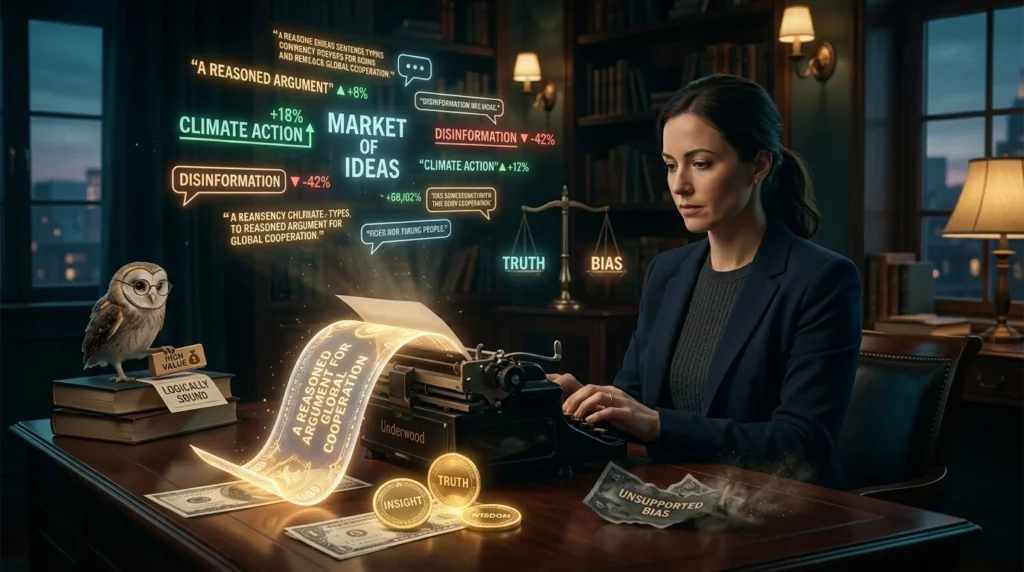
Have you ever heard someone say, “That’s my two cents,” when sharing an opinion? Most people use phrases like this without thinking much about them. Yet they are powerful examples of a monetary metaphor for one’s opinion.
Writers, speakers, students, and storytellers often use money-related imagery to describe ideas, beliefs, advice, and personal viewpoints. Why? Because money has value. Opinions can have value too. Some opinions are treasured like gold, while others may feel cheap, costly, or priceless depending on the situation.
Many people search for a monetary metaphor for one’s opinion because they want a creative way to express thoughts in essays, poems, stories, speeches, social media captions, or everyday conversations. The right metaphor can turn a simple statement into something memorable.
Let’s explore some of the most effective and imaginative examples.
What Is a Monetary Metaphor for One’s Opinion?
A monetary metaphor for one’s opinion is a figure of speech that compares an opinion to money, wealth, currency, or something valuable without using “like” or “as.”
In simple terms, it treats thoughts and viewpoints as if they were financial assets.
Writers use these metaphors because they:
- Show value or importance
- Create vivid imagery
- Make ideas easier to understand
- Add personality to writing
- Express confidence or doubt
Simple Examples
- My opinion is gold.
- Her advice is a valuable investment.
- His thoughts are loose change in a serious debate.
- Their perspective is a hidden treasure.
These comparisons help readers instantly understand how much weight an opinion carries.
Quick List of Monetary Metaphor for One’s Opinion Examples
- My opinion is two cents. — A humble contribution.
- My view is gold bullion. — Highly valuable.
- Her advice is a wise investment. — Helpful in the long run.
- His thoughts are pocket change. — Minor importance.
- Their perspective is a hidden treasure. — Valuable but overlooked.
- My belief is a rare coin. — Unique and special.
- Her argument is solid gold. — Strong and trustworthy.
- His opinion is a blank check. — Given freely without limits.
- Their insight is a fortune waiting to be discovered. — Full of value.
- My viewpoint is currency in this discussion. — Relevant and useful.
- Her words are a rich deposit. — Full of wisdom.
- His judgment is an expensive lesson. — Learned through experience.
- Their perspective is a growing investment account. — Becoming more valuable.
- My idea is a diamond in the vault. — Precious and protected.
- Her opinion is a treasure chest. — Packed with valuable insights.
- His viewpoint is counterfeit currency. — Lacking credibility.
- Their advice is financial gold. — Extremely useful.
- My thoughts are shares in the future. — Potentially rewarding.
- Her perspective is a premium asset. — Highly respected.
- His opinion is a debt unpaid. — Something that still demands attention.
Beautiful Metaphors for One’s Opinion
Some metaphors focus less on money itself and more on the value associated with it.
My Opinion Is a Gold Coin
A gold coin suggests lasting worth.
Example:
“My opinion was a gold coin passed carefully around the room.”
This creates an image of something respected and examined.
My Viewpoint Is a Hidden Treasure
This metaphor suggests an overlooked idea.
Example:
“Her viewpoint was a hidden treasure buried beneath louder voices.”
My Thoughts Are a Vault of Riches
This metaphor emphasizes depth and wisdom.
Example:
“Years of experience turned his thoughts into a vault of riches.”
My Opinion Is a Diamond Investment
Diamonds symbolize rarity and long-term value.
Example:
“Her opinion was a diamond investment that became more valuable over time.”
My Perspective Is Pure Gold
One of the simplest and strongest choices.
Example:
“His perspective was pure gold during the crisis.”
Poetic and Deep Monetary Metaphor for One’s Opinion Ideas
Poetry often combines money imagery with emotion and symbolism.
My Opinion Is an Unspent Coin
Represents thoughts kept hidden.
Example:
“My opinion remained an unspent coin at the bottom of my heart.”
My Viewpoint Is a Lost Fortune
Suggests wisdom ignored or forgotten.
Example:
“The old man’s viewpoint was a lost fortune nobody bothered to recover.”
My Thoughts Are Minted Under Pressure
Like coins forged through intense heat and force.
Example:
“My thoughts were minted under pressure and polished by experience.”
My Opinion Is a Treasury of Scars
Connects wisdom with hardship.
Example:
“Her opinion was a treasury of scars gathered from difficult years.”
My Perspective Is Interest Earned by Time
A beautiful metaphor for maturity.
Example:
“His perspective was interest earned by time itself.”
Monetary Metaphor for One’s Opinion in Creative Writing
Writers often use monetary metaphors to reveal character, conflict, and emotion.
In Stories
Instead of writing:
“She had a valuable opinion.”
Write:
“Her opinion was gold in a room full of gravel.”
That tiny change creates a stronger image.
In Poetry
Instead of saying:
“My ideas matter.”
Try:
“My ideas are coins tossed into the fountain of tomorrow.”
In Essays
You can write:
“Every citizen’s opinion is political currency.”
In School Assignments
You might write:
“A student’s perspective is an investment in classroom discussion.”
Metaphor vs Simile
| Feature | Metaphor | Simile |
|---|---|---|
| Meaning | Direct comparison | Comparison using like or as |
| Structure | Opinion is gold | Opinion is like gold |
| Emotional Impact | Stronger | Softer |
| Imagery | Immediate | Gradual |
| Example | Her opinion is a treasure chest. | Her opinion is like a treasure chest. |
| Common Mistake | Forgetting the direct comparison | Using metaphor when a simile is intended |
Quick Rule
A metaphor says something is something else.
A simile says something is like something else.
Why People Confuse Metaphors and Similes
This is where many beginners get confused.
Both compare two different things.
The difference is small.
Metaphor
“His opinion is gold.”
Simile
“His opinion is like gold.”
Students often focus on the image and forget to notice the grammar.
The words like and as usually signal a simile.
Without them, it is often a metaphor.
Real-Life Conversation Examples
School Discussion
Student A: “What do you think about the project?”
Student B: “My opinion is only two cents, but I think we should simplify it.”
🎯 Lesson: A monetary metaphor can make a response sound humble.
Classroom Debate
Teacher: “Whose argument was strongest?”
Student: “Sarah’s opinion was gold today.”
🎯 Lesson: Gold symbolizes value and quality.
Poetry Workshop
Writer: “How would you describe your perspective?”
Poet: “My viewpoint is a hidden treasure waiting to be uncovered.”
🎯 Lesson: Treasure suggests overlooked worth.
Social Media Caption
Friend: “Any advice?”
Reply: “Here’s my two cents.”
🎯 Lesson: A classic monetary metaphor that feels casual and friendly.
Storytelling
Character: “Everyone ignored him.”
Narrator: “His opinion was a fortune buried beneath noise.”
🎯 Lesson: Fortune symbolizes lost value.
How to Create Your Own Monetary Metaphor for One’s Opinion
Here’s the simple trick.
Think about value first.
Ask yourself:
- Is the opinion important?
- Is it ignored?
- Is it rare?
- Is it costly?
- Is it rewarding?
Then match it to money imagery.
Opinion + High Value
- Gold
- Diamonds
- Treasure
- Fortune
Opinion + Small Value
- Loose change
- Penny
- Pocket change
Opinion + Growth
- Investment
- Interest
- Savings account
Opinion + Risk
- Gamble
- Stock
- Venture capital
Most writers use this because readers instantly understand the symbolism.
Common Mistakes Beginners Make
Using Clichés Too Often
Mistake: Everything becomes gold.
Why it happens: Gold is easy to imagine.
Better version: My opinion is a rare coin minted once in a century.
Mixing Metaphors
Mistake: My opinion is gold sailing through a storm.
Why it happens: Too many images.
Better version: My opinion is a gold coin weathered by storms.
Making the Comparison Unclear
Mistake: My opinion is finance.
Why it happens: The image lacks meaning.
Better version: My opinion is an investment that rewards patience.
Overcomplicating the Image
Mistake: Using many financial terms at once.
Why it happens: Trying too hard to sound poetic.
Better version: Her perspective is a hidden treasure.
Related Figurative Language Terms
Simile
Compares using “like” or “as.”
Example: Her opinion is like gold.
Imagery
Language that creates mental pictures.
Example: His words glittered like coins in sunlight.
Personification
Gives human qualities to nonhuman things.
Example: The idea begged for attention.
Symbolism
Uses one thing to represent another.
Example: Gold symbolizes value and wisdom.
Hyperbole
Intentional exaggeration.
Example: Her opinion was worth a billion dollars.
Symbolism of Money in Literature
Money often symbolizes more than wealth.
Writers use it to represent:
- Value
- Wisdom
- Power
- Opportunity
- Sacrifice
- Success
- Human desire
When an opinion becomes gold, treasure, or currency in a metaphor, the writer is really talking about importance, influence, and worth.
That deeper symbolism makes monetary metaphors powerful literary devices.
Frequently Asked Questions
What is a monetary metaphor for one’s opinion?
A monetary metaphor for one’s opinion compares a viewpoint to money, wealth, treasure, or currency to suggest value or importance.
What is the most common monetary metaphor for an opinion?
“My two cents” is one of the most common examples in everyday English.
Why do writers compare opinions to money?
Because both opinions and money can have value, influence decisions, and affect outcomes.
Is “my opinion is gold” a metaphor?
Yes. It directly compares an opinion to gold without using “like” or “as.”
What is a poetic monetary metaphor for one’s opinion?
“My opinion is an unspent coin resting in the shadows of silence.”
Can monetary metaphors be used in essays?
Yes. They work well in essays, speeches, stories, and creative writing.
Are monetary metaphors figurative language?
Yes. They are a type of figurative language that uses symbolic comparison.
What is the difference between a monetary metaphor and a simile?
A metaphor says the opinion is something valuable. A simile says it is like something valuable.
Conclusion
A strong monetary metaphor for one’s opinion can transform an ordinary statement into something memorable. Whether you compare a viewpoint to gold, treasure, a rare coin, an investment, or even simple pocket change, the metaphor helps readers feel the value behind the idea.
The best metaphors do more than sound clever. They reveal importance, emotion, experience, and meaning. As you practice creative writing, try connecting opinions to different forms of wealth and value. You may discover images that feel fresh, personal, and surprisingly powerful.
After all, every opinion carries some worth—the real challenge is finding the metaphor that helps others see it.